
Hydrological Data Interpretation
Overview
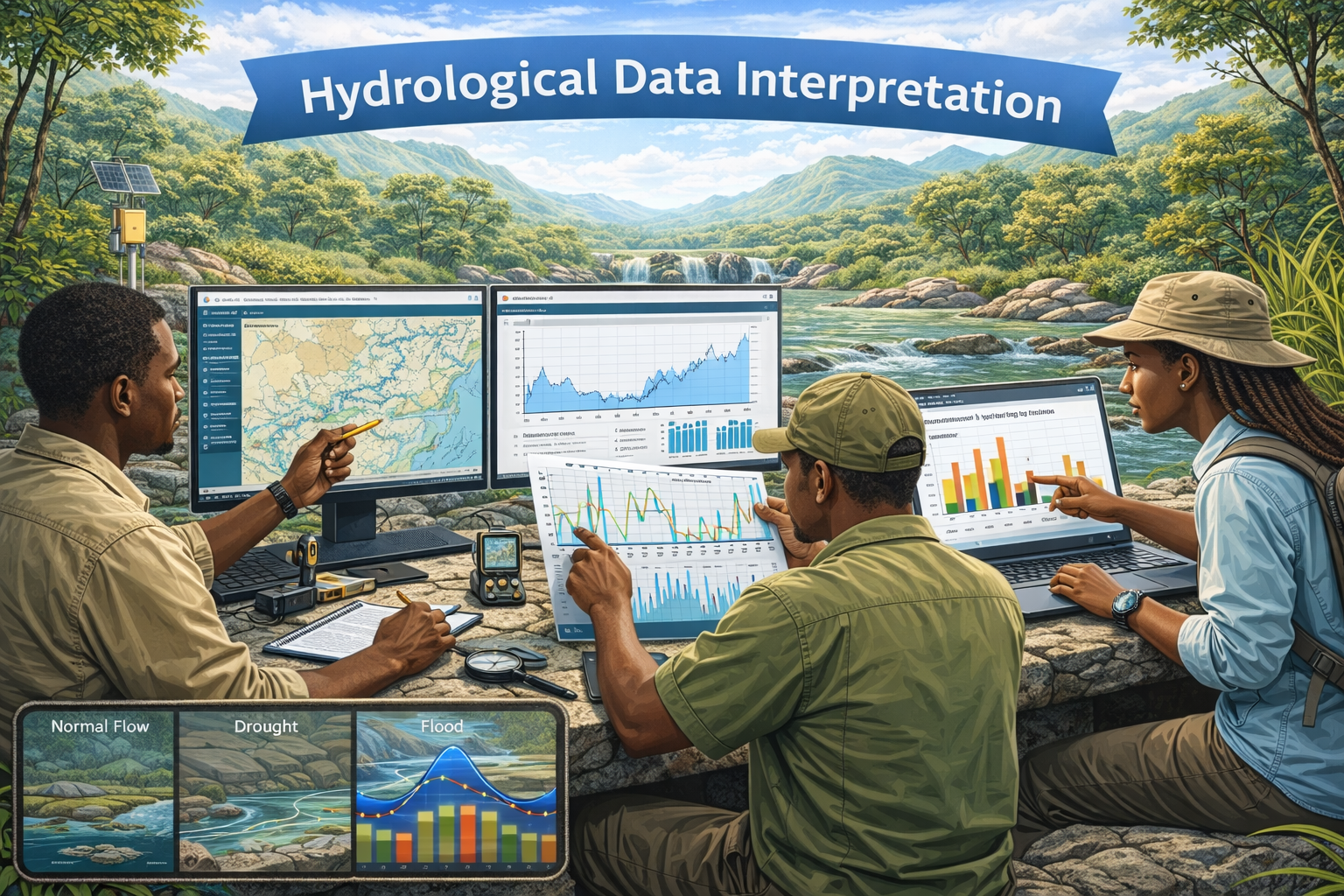
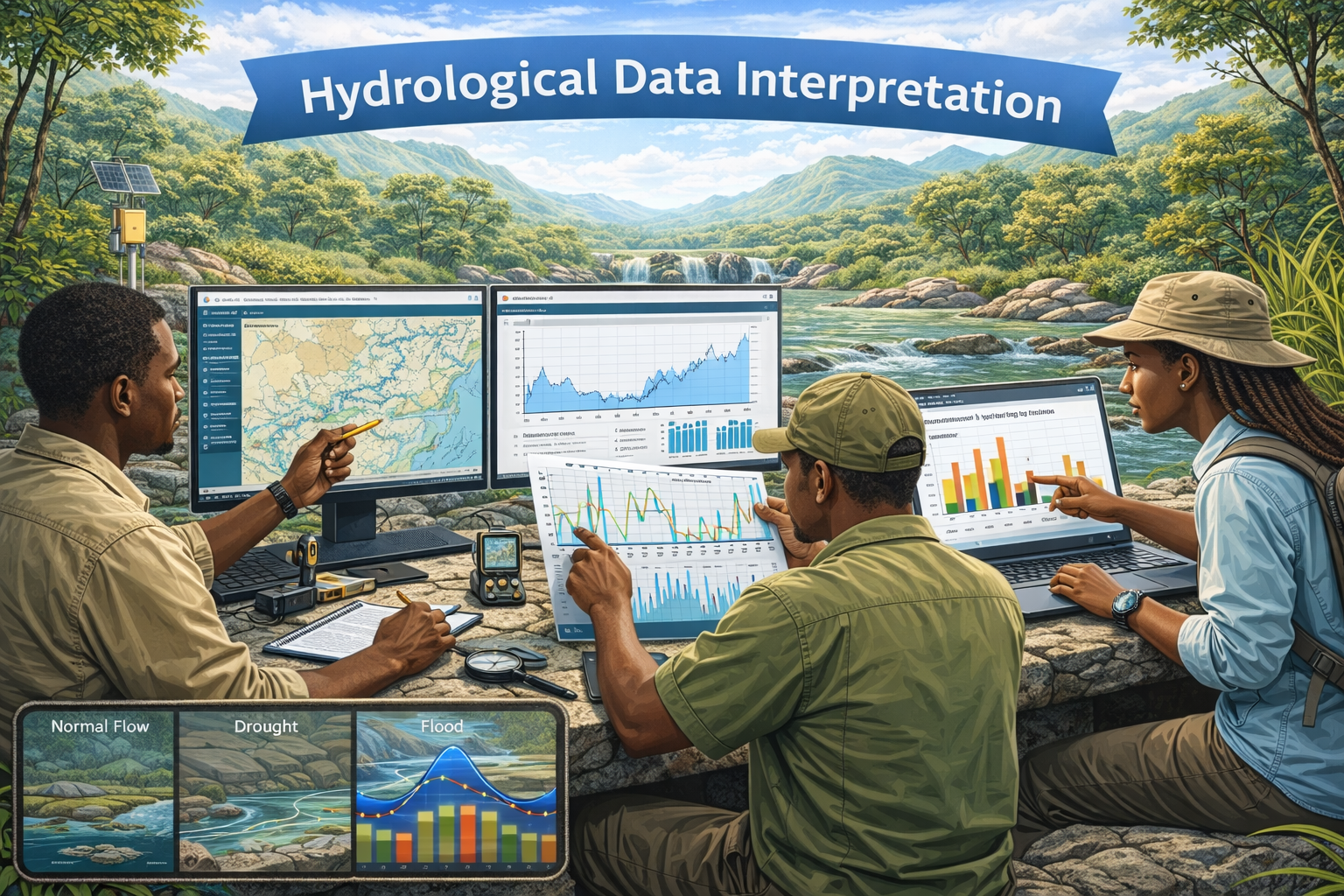
Develop core competencies in analysing hydrological data for water resource management. This course covers fundamental concepts in streamflow analysis, rating curves, flow duration curves, and statistical methods commonly applied in Southern African catchments. You’ll learn how to interpret key hydrological datasets, assess data quality, derive meaningful indicators for drought and floods, and apply these insights within INWARDS decision-support workflows.
What you will learn
- Hydrological data types – discharge, water level, rainfall, and evaporation
- Rating curves – stage–discharge relationships and curve development concepts
- Flow duration curves – exceedance probability analysis and interpretation
- Low-flow & drought indices – metrics such as Q95 and 7Q10
- Flood frequency analysis – return periods and basic frequency concepts
- Data quality assessment – gap filling, outlier detection, and homogeneity testing
- INWARDS application – applying hydrological statistics within INWARDS
- Communication – presenting hydrological information effectively to stakeholders
Course details
- Duration: 8–10 hours
- Prerequisites: Introduction to INWARDS (recommended); basic statistics knowledge helpful
- Language: English (Portuguese translation available)
- Professor: Hugo Retief
Indicators of Hydrological Alteration (IHA)
Overview
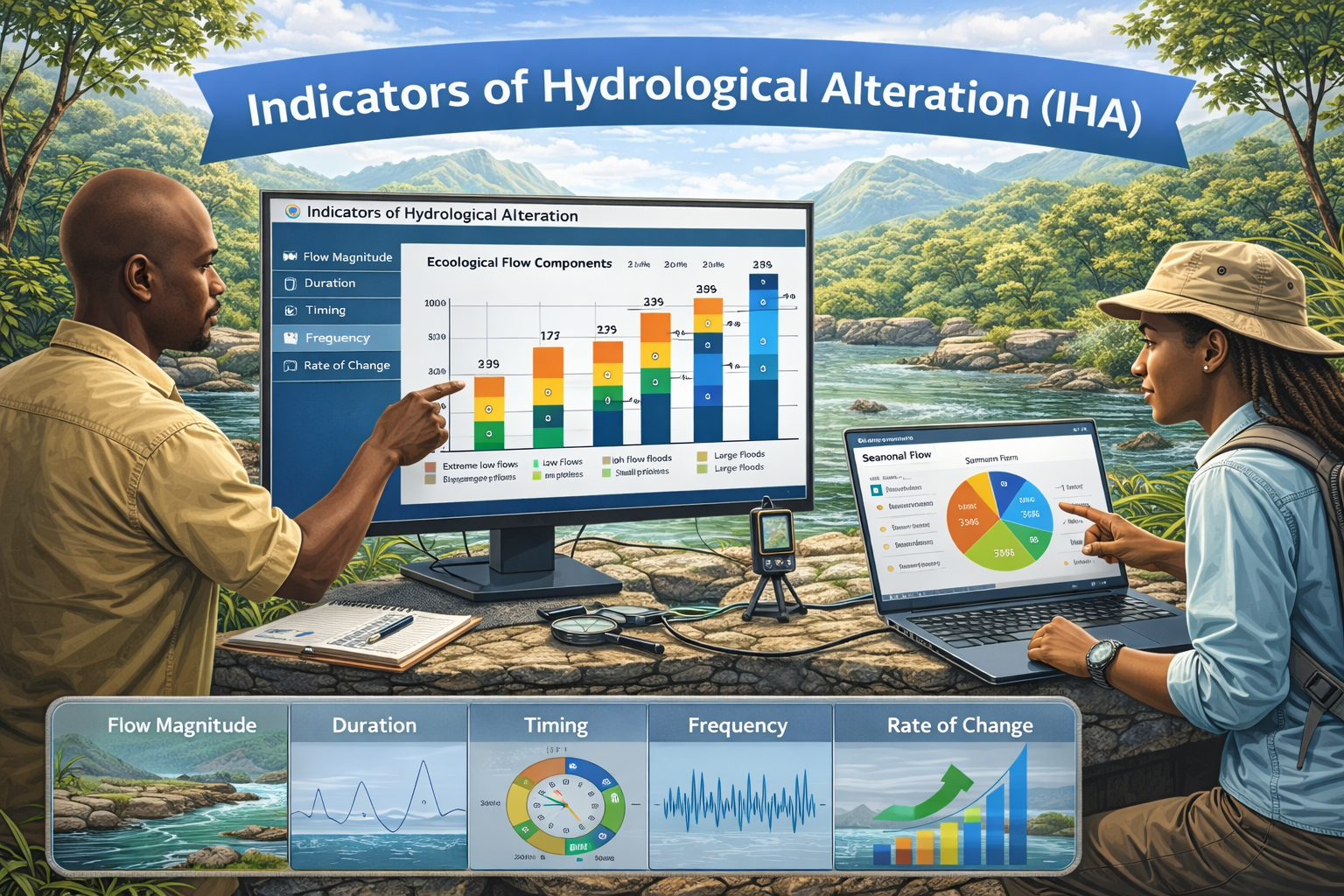
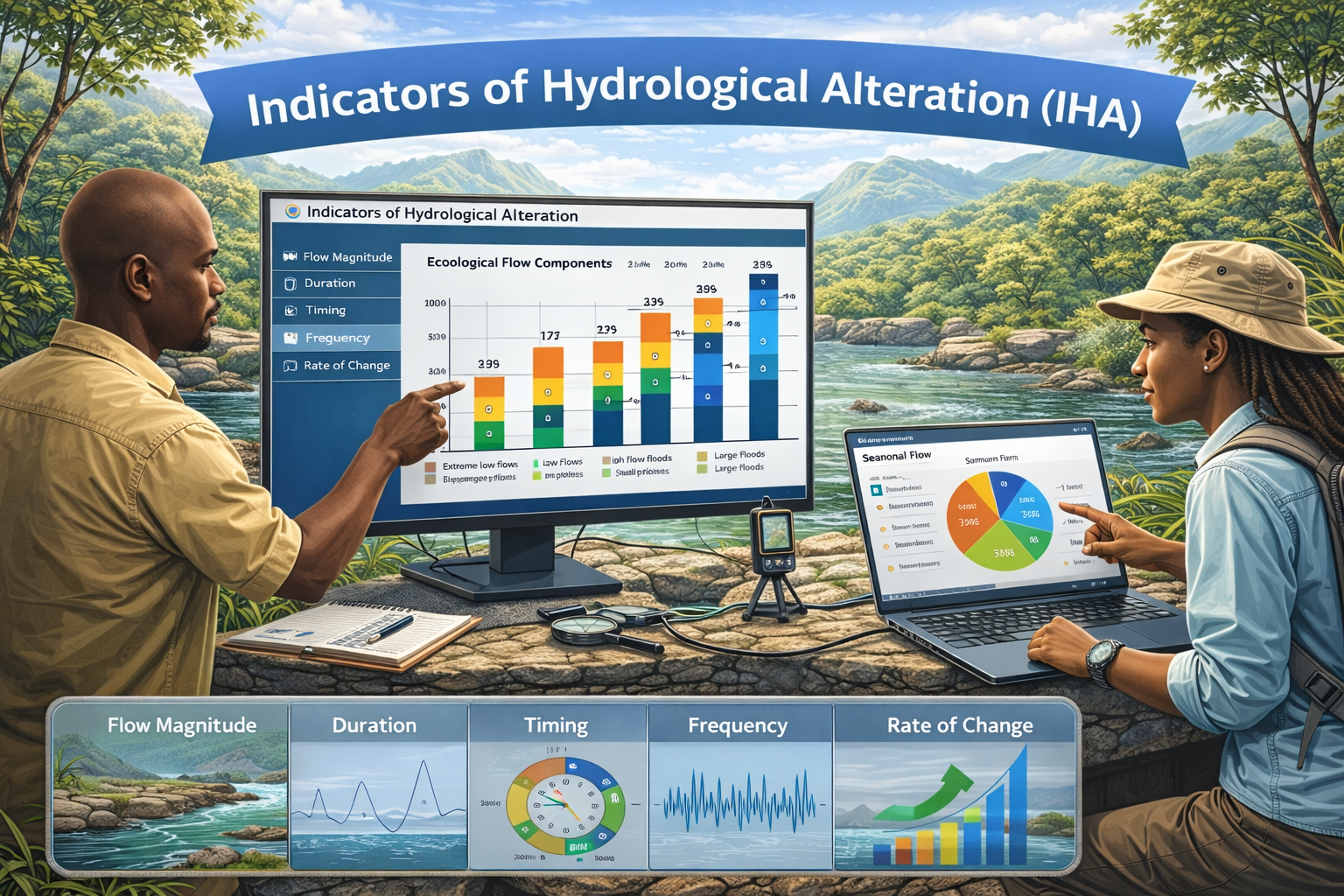
Learn to apply the Indicators of Hydrological Alteration (IHA) methodology for assessing environmental flow requirements and detecting anthropogenic impacts on river flow regimes. This course introduces the 33 IHA parameters and their ecological significance, and builds practical skills through exercises using the INWARDS IHA dashboards. By the end, learners will be able to interpret IHA outputs, compare pre- and post-impact periods, and translate results into defensible management recommendations.
What you will learn
- IHA framework – the five groups of hydrological parameters
- Ecological relevance – magnitude, timing, frequency, duration, and rate of change
- Impact detection – pre- and post-impact analysis for flow regime alteration
- RVA targets – Range of Variability Approach (RVA) for environmental flow objectives
- INWARDS dashboards – using IHA + Fish and IHA + Invert tools
- Interpretation – turning IHA metrics into management-relevant insights
- Ecohydrological linkage – relating flow alteration to biological response indicators
Course details
- Duration: 6–8 hours
- Prerequisites: Hydrological Data Interpretation
- Language: English (Portuguese translation available)
- Professor: Hugo Retief
Real-time Monitoring Systems
Overview
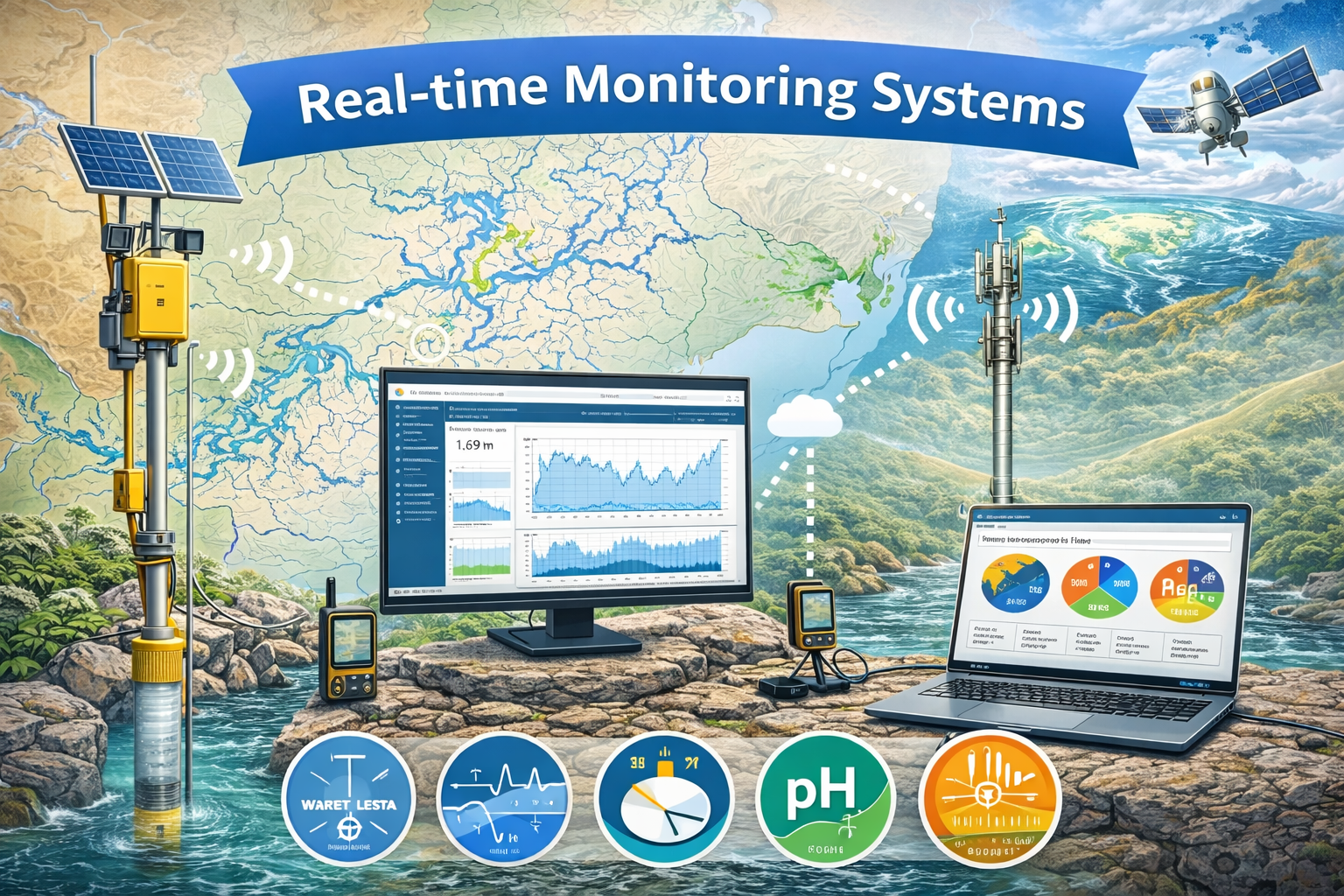
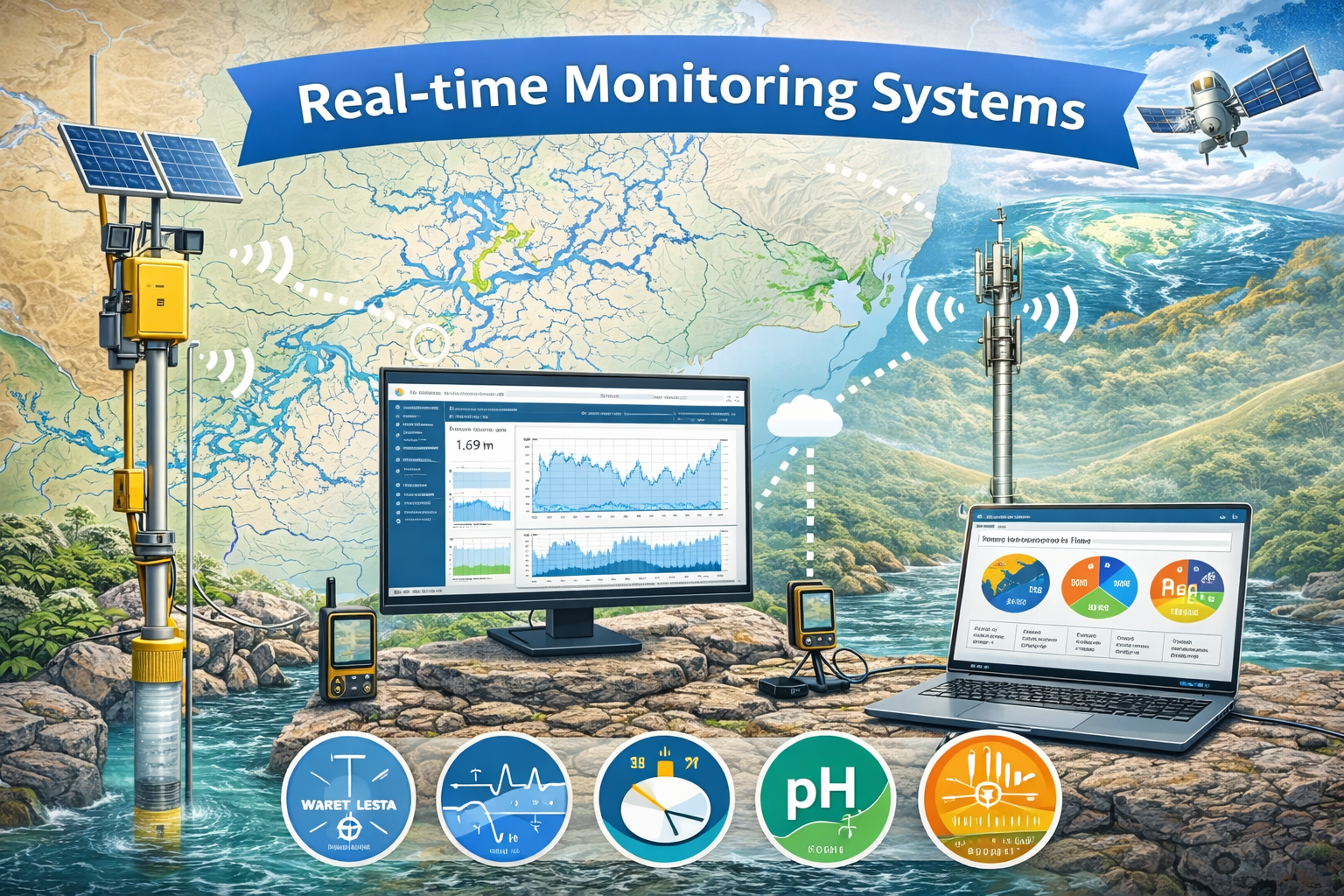
Explore the technologies and workflows behind real-time environmental monitoring in river systems. This course covers telemetry infrastructure, data transmission protocols, alert systems, and the integration of live data streams into INWARDS and related platforms. Learners will gain a practical understanding of how monitoring networks operate end-to-end—from sensors in the field through to dashboards, notifications, and decision-support use.
What you will learn
- Telemetry components – sensors, loggers, and transmission hardware
- Communication protocols – GSM, satellite, radio, and IoT networks
- INWARDS live dashboards – interpreting the Real-time Flows dashboard and live gauging data
- Automated alerts – setting threshold notifications (SMS, WhatsApp, email)
- Reliability & troubleshooting – latency, data gaps, and common failure modes
- Stream integration – linking real-time flows with FISHTRAC and water quality sensors
- Operations & maintenance – sustaining remote station performance over time
- Cost and planning – infrastructure planning and cost considerations for monitoring networks
Course details
- Duration: 6–8 hours
- Prerequisites: Introduction to INWARDS
- Language: English (Portuguese translation available)
- Professor: Hugo Retief
Introduction to INWARDS
Overview
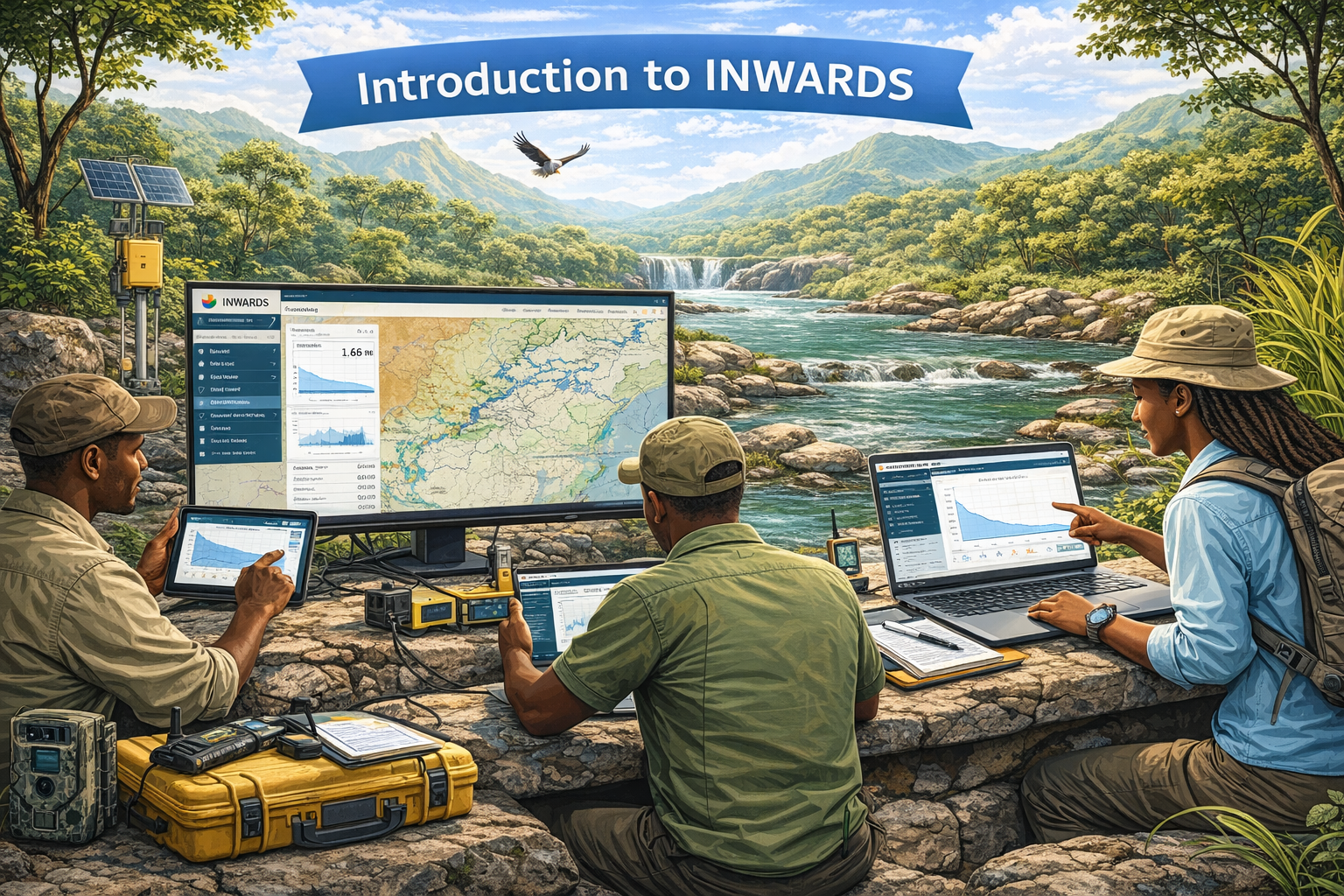
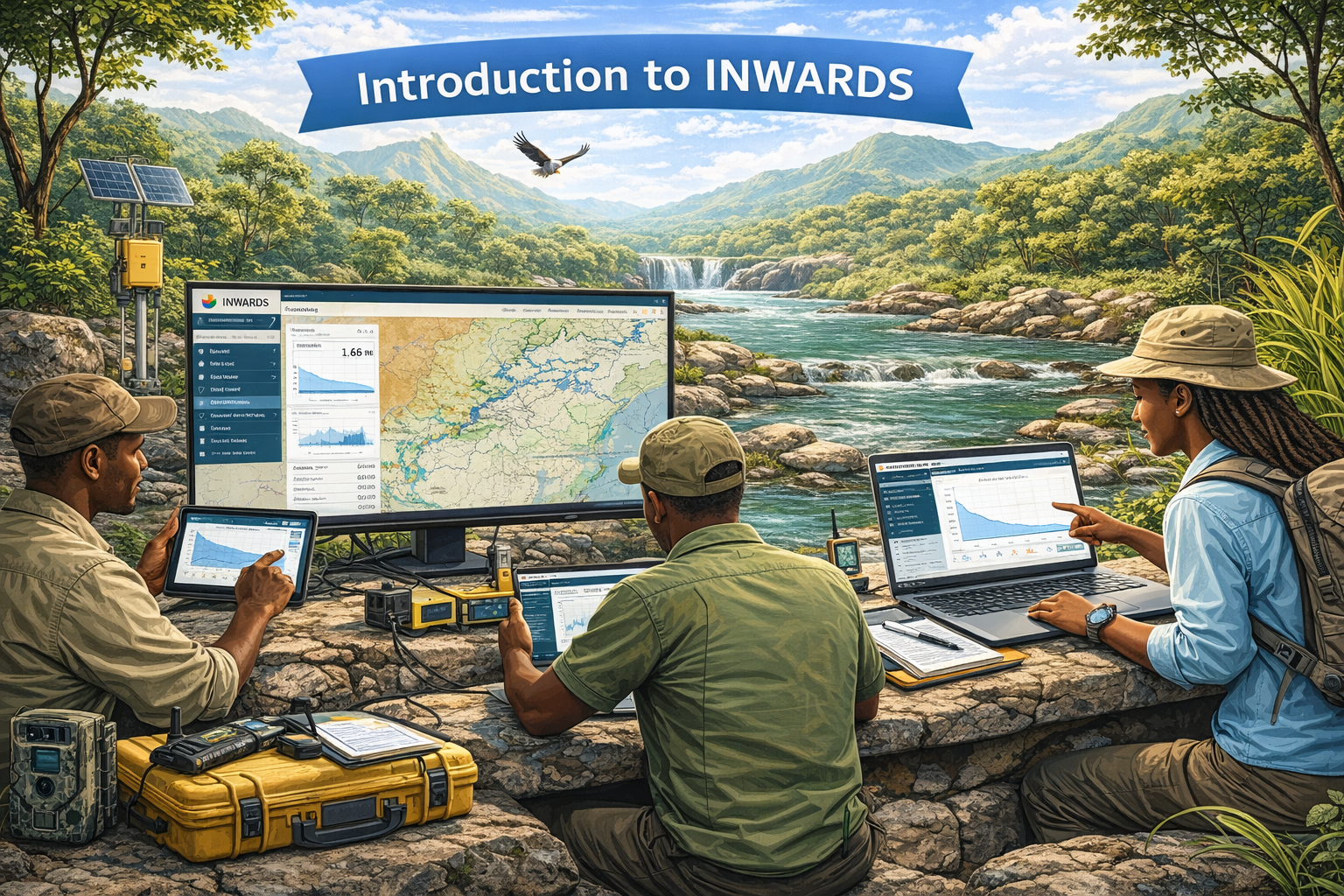
Discover the capabilities of INWARDS (Integrated Water Resources Decision Support System), AWARD’s flagship platform for water resource management. This introductory course provides an overview of INWARDS architecture, data sources, and the analytical dashboards available to support basin managers and practitioners. You’ll learn how to register, navigate the platform, interpret data updates, and understand how organisations such as IUCMA and SANParks use INWARDS operationally.
What you will learn
- Platform architecture – INWARDS design philosophy and how components fit together
- Dashboards overview – Real-time Flows, Water Quality, KNP, IHA, Compliance, and more
- Data sources – DWS gauging stations, telemetry networks, and partner contributions
- User onboarding – registration, navigation, and core interface fundamentals
- Data refresh cycles – real-time vs historical data and update frequencies
- Operational case studies – examples from IUCMA and SANParks
Course details
- Duration: 4–5 hours
- Prerequisites: None
- Language: English (Portuguese translation available)
- Access: https://inwards.award.org.za
- Professor: Hugo Retief