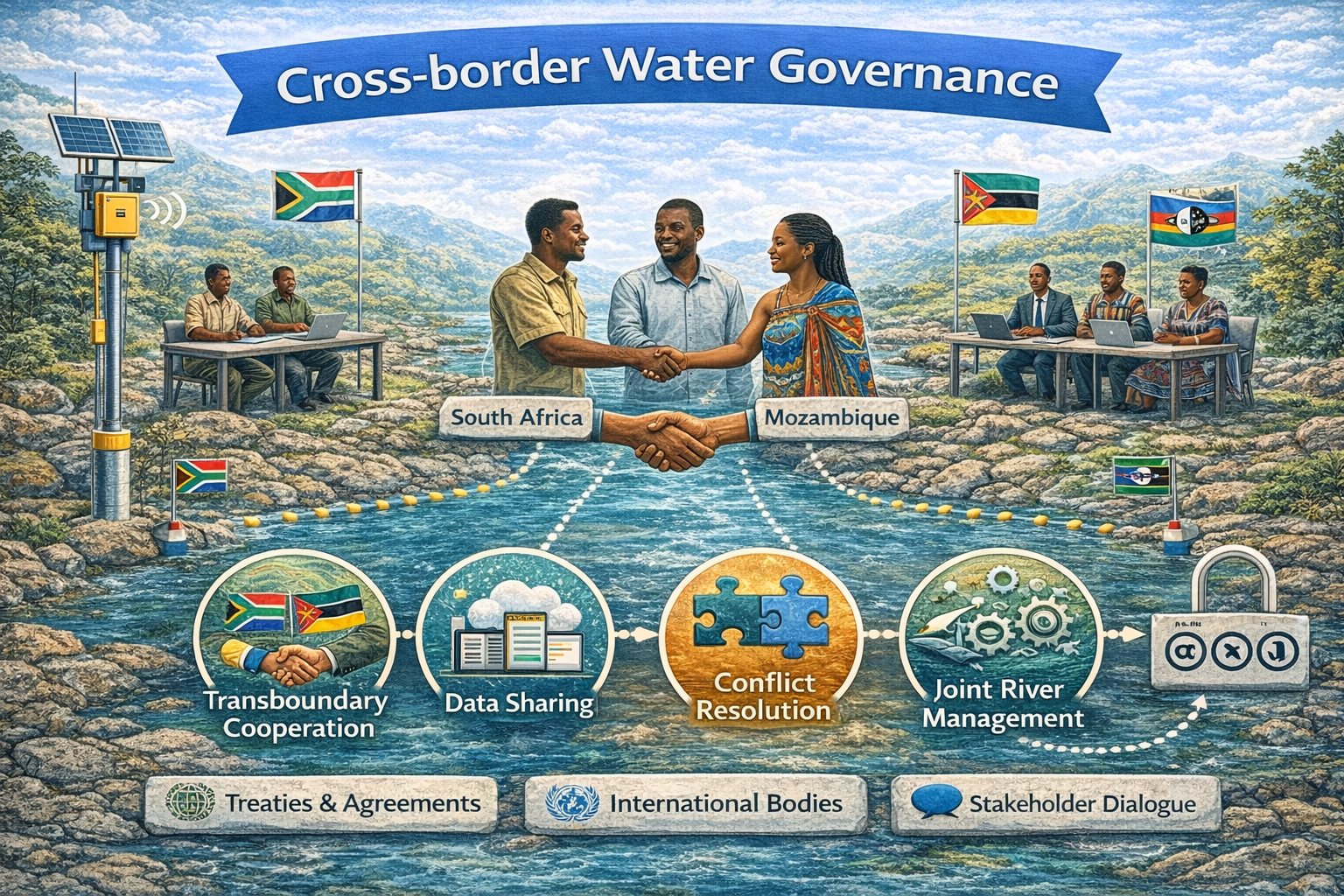
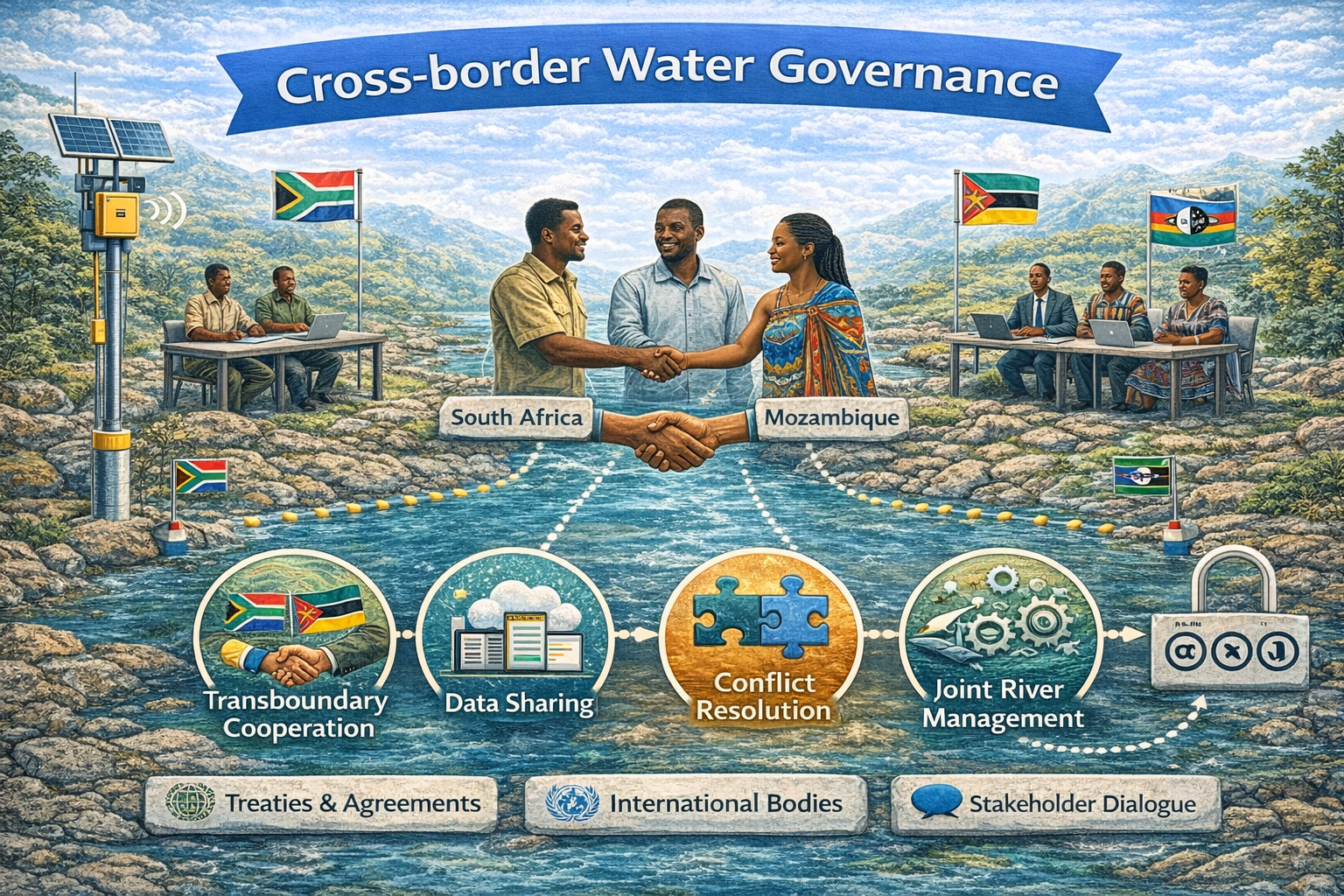
Cross-border Water Governance
Overview
Examine the institutional frameworks and governance mechanisms for managing shared water resources across national boundaries. This course focuses on the Inkomati Basin and the broader Southern African context, including the roles of INMACOM, KOBWA, and REMCO. Learners will explore how international agreements, river basin organisations, and cooperative processes enable allocation, risk management, and ecosystem protection in transboundary basins.
What you will learn
- International water law – UN Watercourses Convention and the SADC Protocol on Shared Watercourses
- River basin organisations – structures, mandates, and operational models
- Inkomati Basin governance – arrangements between South Africa, Mozambique, and Eswatini
- Institutional roles – INMACOM, KOBWA, and REMCO responsibilities and coordination
- Benefit sharing – cooperative approaches and conflict-resolution mechanisms
- Environmental flows – ecological reserve concepts in transboundary contexts
- Data sharing – agreements, information exchange, and protocol fundamentals
Course details
- Duration: 6–8 hours
- Prerequisites: None
- Language: English (Portuguese translation available)
- Teacher: Thembhani Mabunda
- Teacher: Hugo Retief
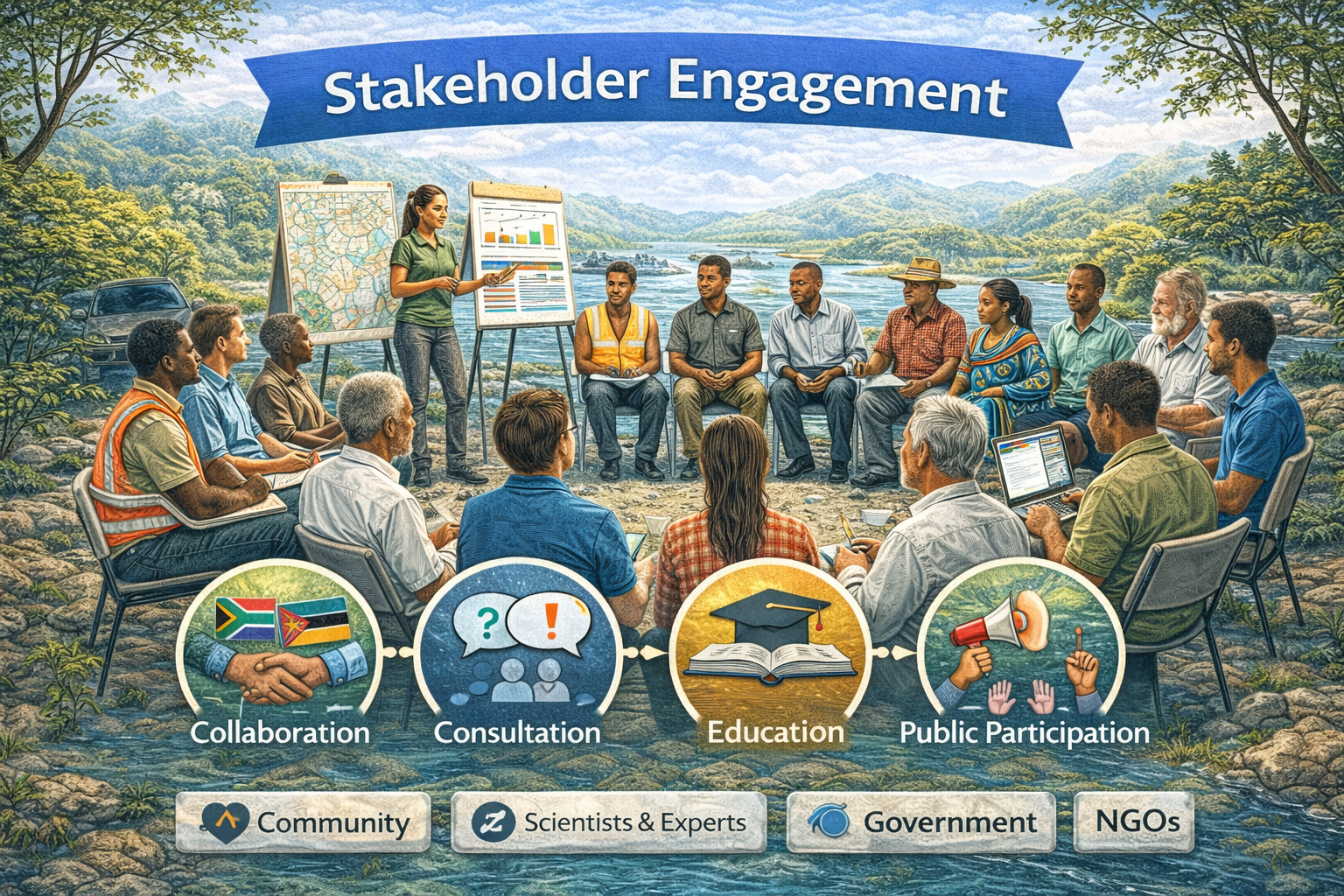
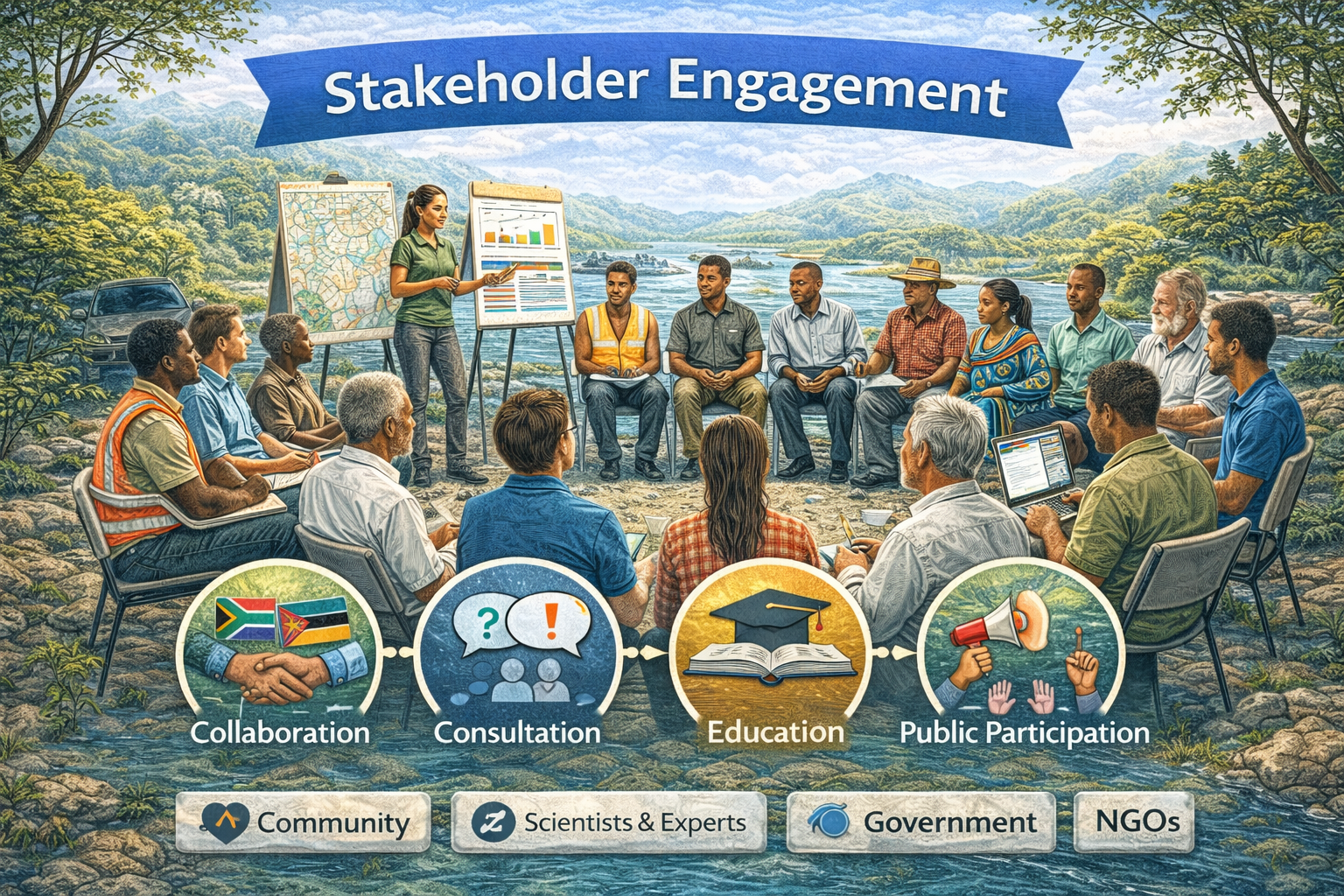
Stakeholder Engagement
Overview
Build practical skills for engaging diverse stakeholders in transboundary biodiversity and water management initiatives. This course covers participatory approaches, communication strategies, and techniques for building trust and consensus across cultural and institutional boundaries. Learners will explore how to design inclusive engagement processes, facilitate productive dialogue, and apply ethical practice when working with communities and traditional knowledge holders—drawing on the TBLN model as a structured co-learning approach.
What you will learn
- Stakeholder analysis – identifying stakeholders and mapping interests, influence, and relationships
- Participatory methods – planning and co-design techniques for inclusive decision-making
- Facilitation – running effective multi-stakeholder workshops and dialogues
- Cross-cultural communication – engaging across languages, norms, and institutional contexts
- Conflict & consensus – managing disagreement and building shared understanding
- Ethics – community engagement principles and responsible handling of traditional knowledge
- Monitoring & evaluation – assessing engagement quality and outcomes over time
- TBLN model – structured co-learning networks and how to apply them in practice
Course details
- Duration: 6–8 hours
- Prerequisites: None
- Language: English (Portuguese translation available)
- Teacher: Hugo Retief
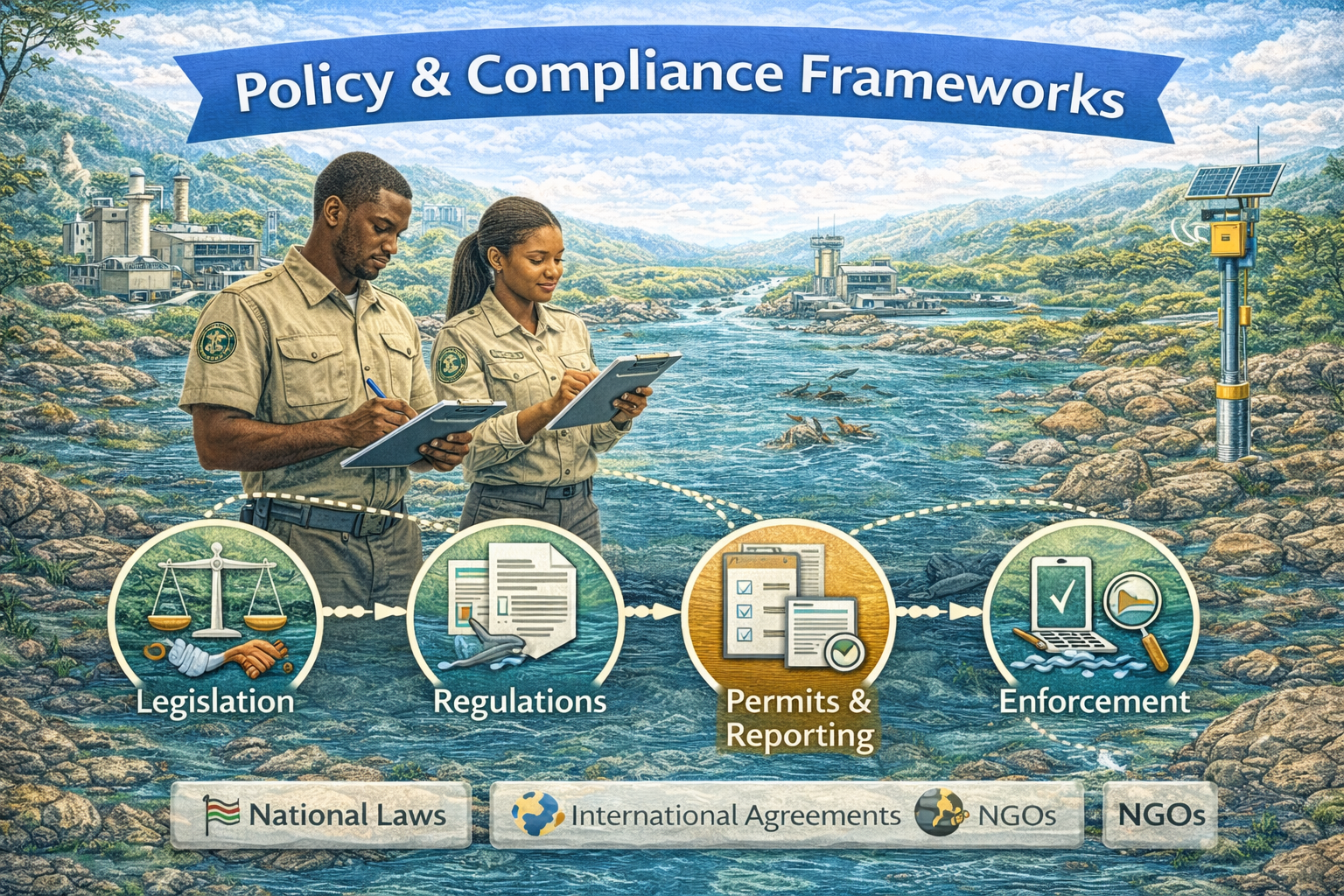
Policy & Compliance Frameworks
Overview
Navigate the policy and regulatory landscape for freshwater biodiversity conservation and water resource management in Southern Africa. This course compares frameworks across South Africa, Mozambique, and Eswatini, with guidance on achieving compliance in transboundary contexts. Learners will build a working understanding of key legal instruments, permitting processes, and compliance mechanisms, and will practice using INWARDS compliance-focused dashboards to support reporting and decision-making.
What you will learn
- South Africa – water and environmental legislation (NWA, NEMA, and biodiversity-related acts)
- Mozambique – water law, environmental licensing, and protected area frameworks
- Eswatini – water and environmental policy landscape
- Permitting processes – Environmental Impact Assessment (EIA) and Water Use Licensing
- Standards & targets – Resource Quality Objectives (RQOs) and ecological reserve determination
- Compliance mechanisms – monitoring, enforcement, and institutional roles
- Transboundary alignment – meeting multi-jurisdictional requirements in shared basins
- INWARDS application – using Compliance and RQO dashboards for regulatory reporting
Course details
- Duration: 8–10 hours
- Prerequisites: Cross-border Water Governance (recommended)
- Language: English (Portuguese translation available)
- Teacher: Hugo Retief