Introduction to Freshwater Ecosystems
Overview
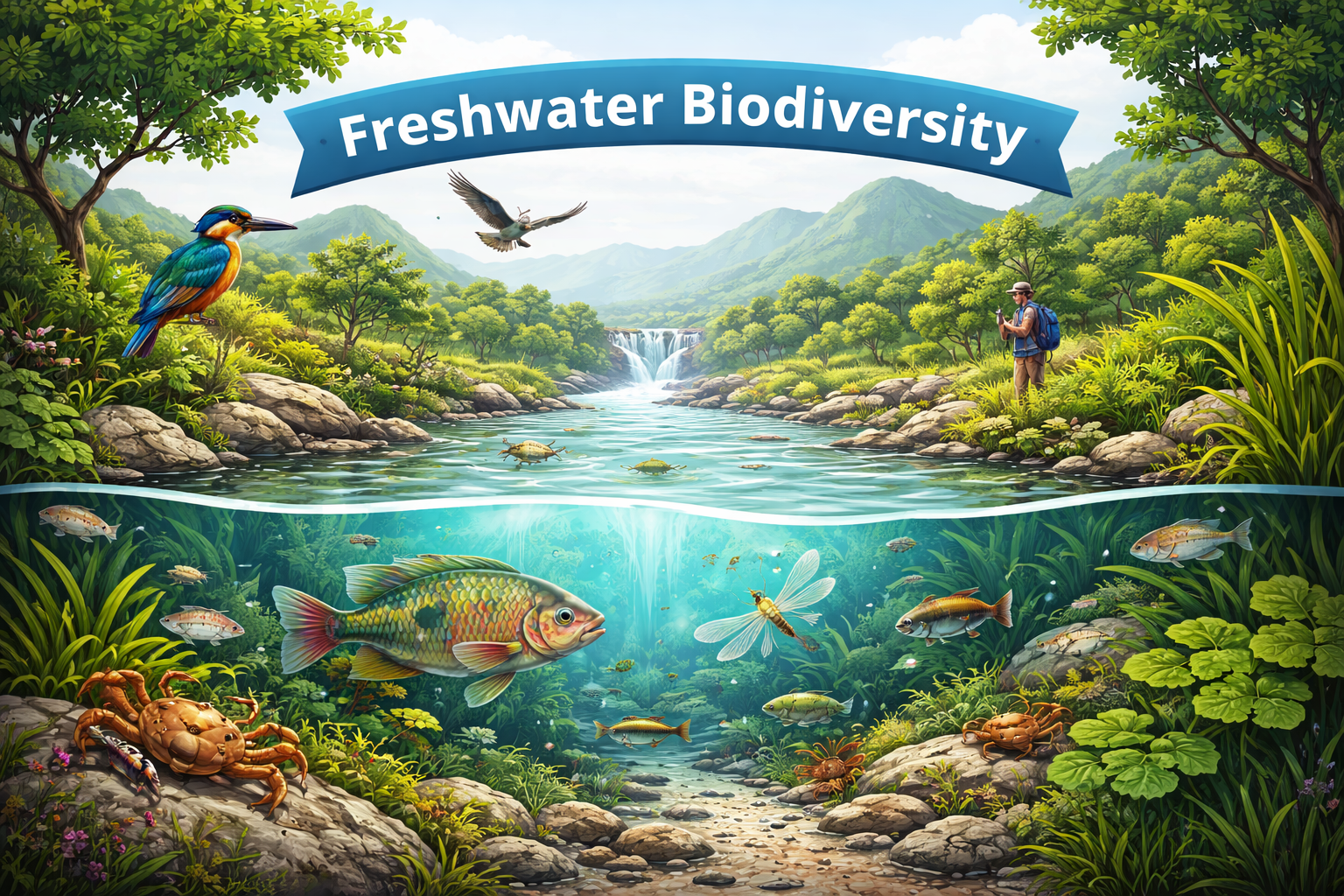
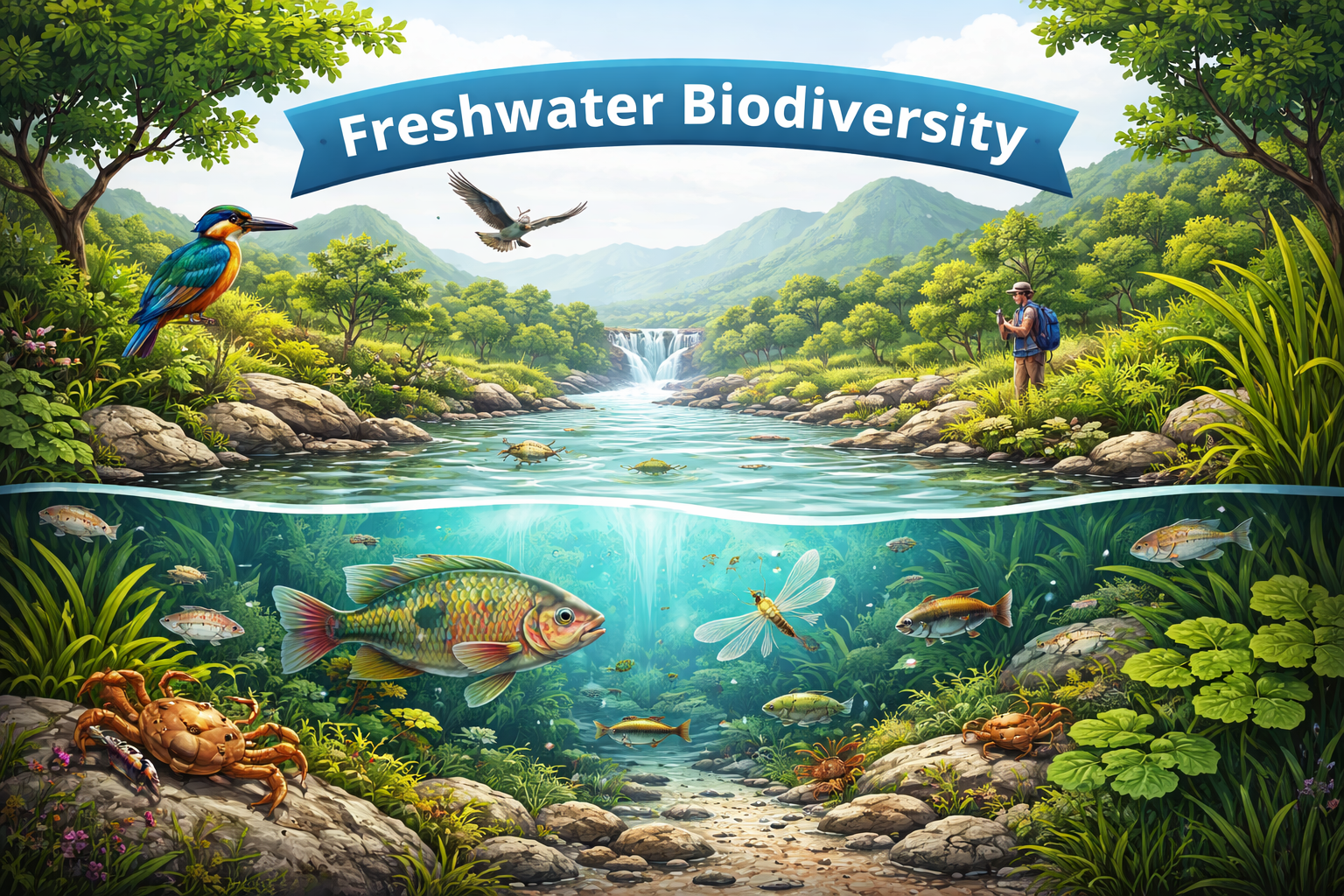
This foundational course introduces the ecology of freshwater systems—rivers, streams, wetlands, and estuaries—and explains how physical, chemical, and biological processes interact to sustain healthy aquatic ecosystems. Using Southern African examples, with particular attention to the transboundary Inkomati Basin, learners will build a practical understanding of ecosystem functioning, key pressures, and why catchment-to-coast connectivity matters for both biodiversity and water-resource management.
What you will learn
- Hydrological cycle – how water movement drives ecosystem dynamics
- Habitat characteristics – physical features of rivers, wetlands, and estuaries that shape biodiversity
- Core ecological processes – nutrient cycling, energy flow, and food webs
- Key threats – pollution, flow alteration, invasive species, and climate change
- Connectivity – why connected transboundary river systems need coordinated management
- Inkomati Basin – geography, climate, and biodiversity of this key transboundary system
Course details
- Duration: 4–6 hours
- Prerequisites: None
- Language: English (Portuguese translation available)
- Teacher: Hugo Retief
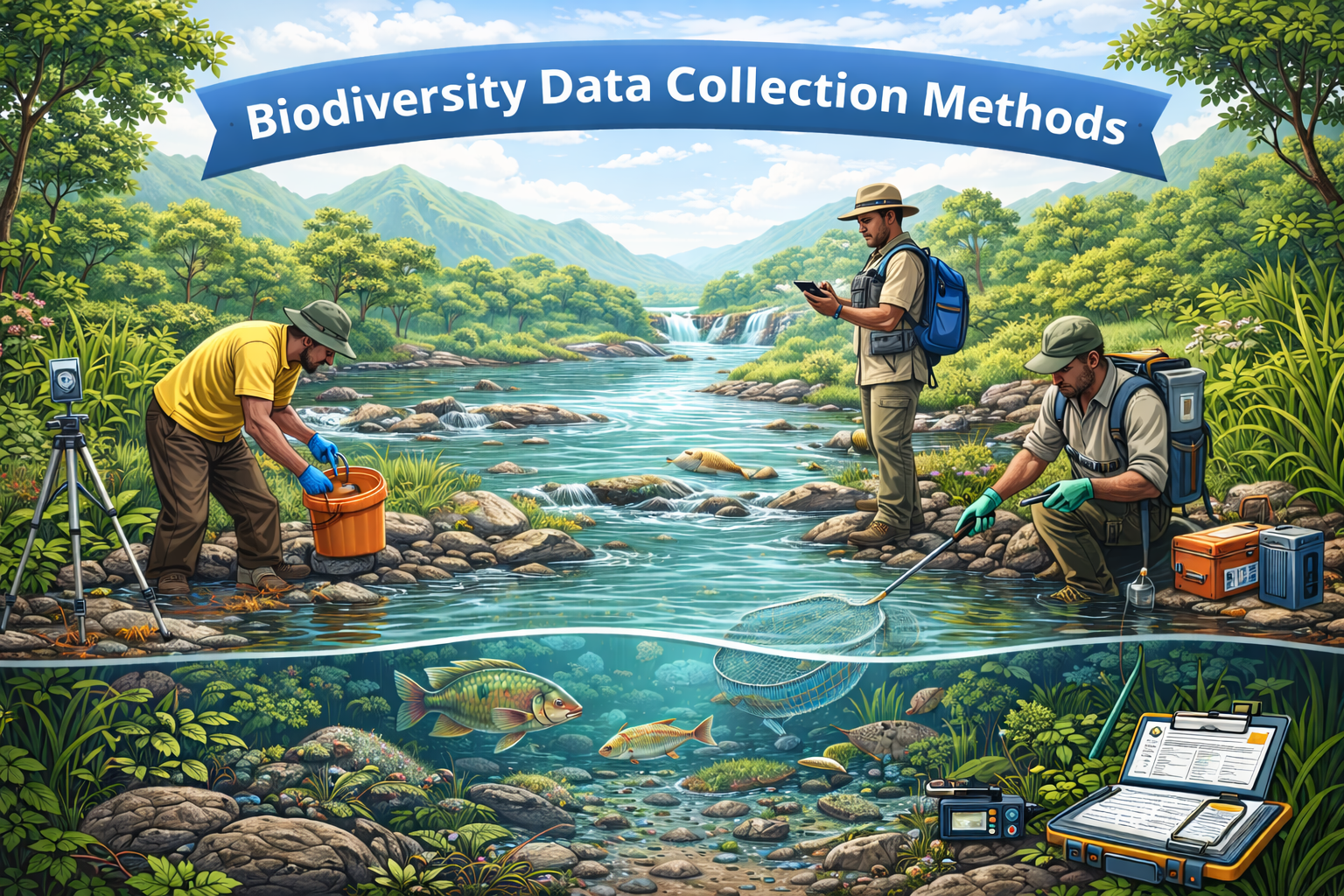
Biodiversity Data Collection Methods
Overview
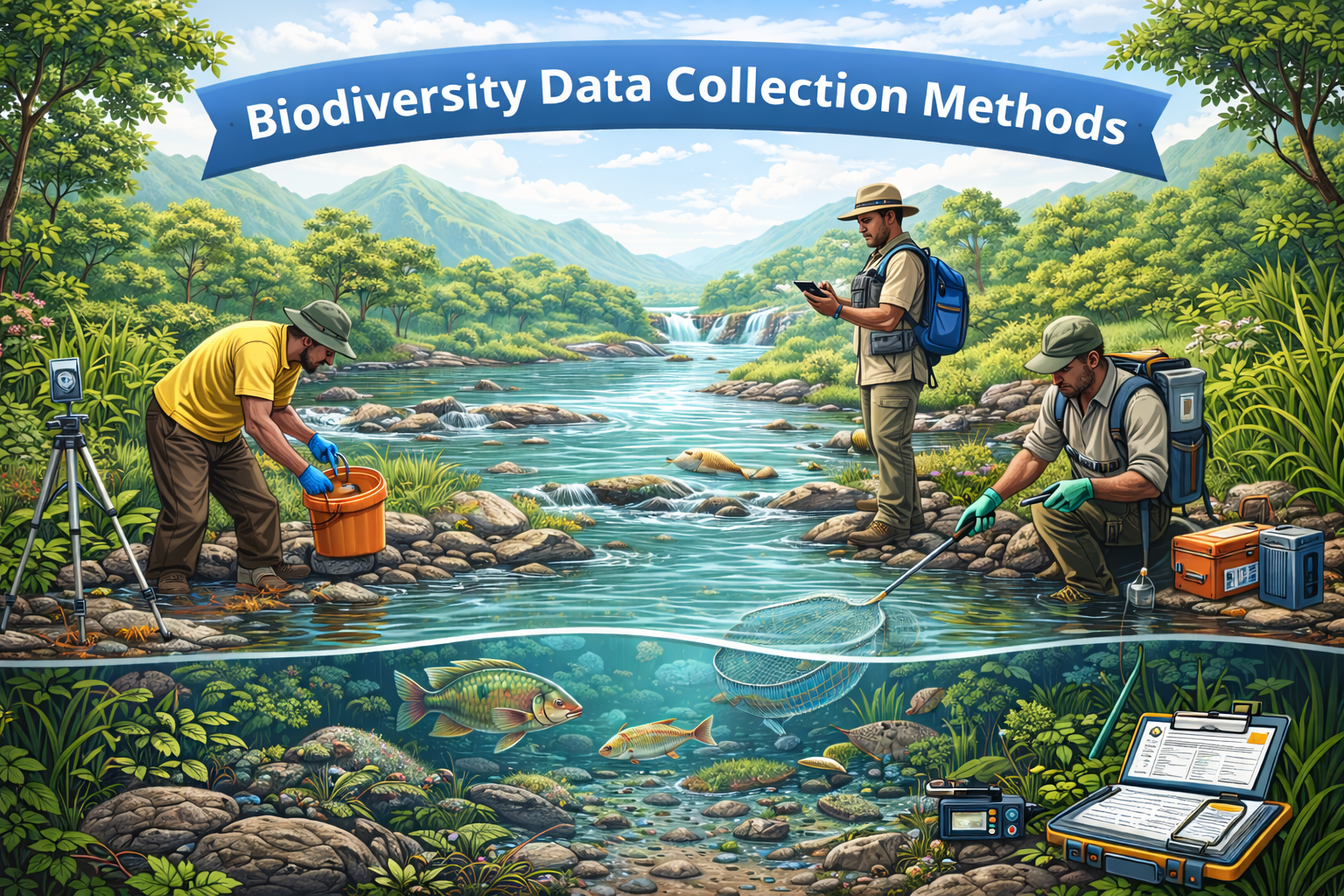
Learn standardised protocols for collecting freshwater biodiversity data in the field. This practical course covers sampling design, field techniques, data recording, and quality assurance procedures aligned with regional and international standards used by FBIS and partner institutions. The focus is on producing consistent, verifiable datasets that can be confidently shared, integrated, and used for monitoring and decision support.
What you will learn
- Sampling design – principles for planning aquatic biodiversity surveys
- Standard operating procedures – fish, invertebrate, and vegetation sampling methods
- Field equipment use – nets, electrofishing gear, and water quality meters
- Data recording protocols – field sheet completion and common QA checks
- GPS and site documentation – location capture, site notes, and photo evidence requirements
- Chain of custody – sample handling, preservation, and traceability practices
- Health and safety – safety considerations for aquatic fieldwork
Course details
- Duration: 8–10 hours (includes practical exercises)
- Prerequisites: Introduction to Freshwater Ecosystems (recommended)
- Language: English (Portuguese translation available)
- Teacher: Hugo Retief
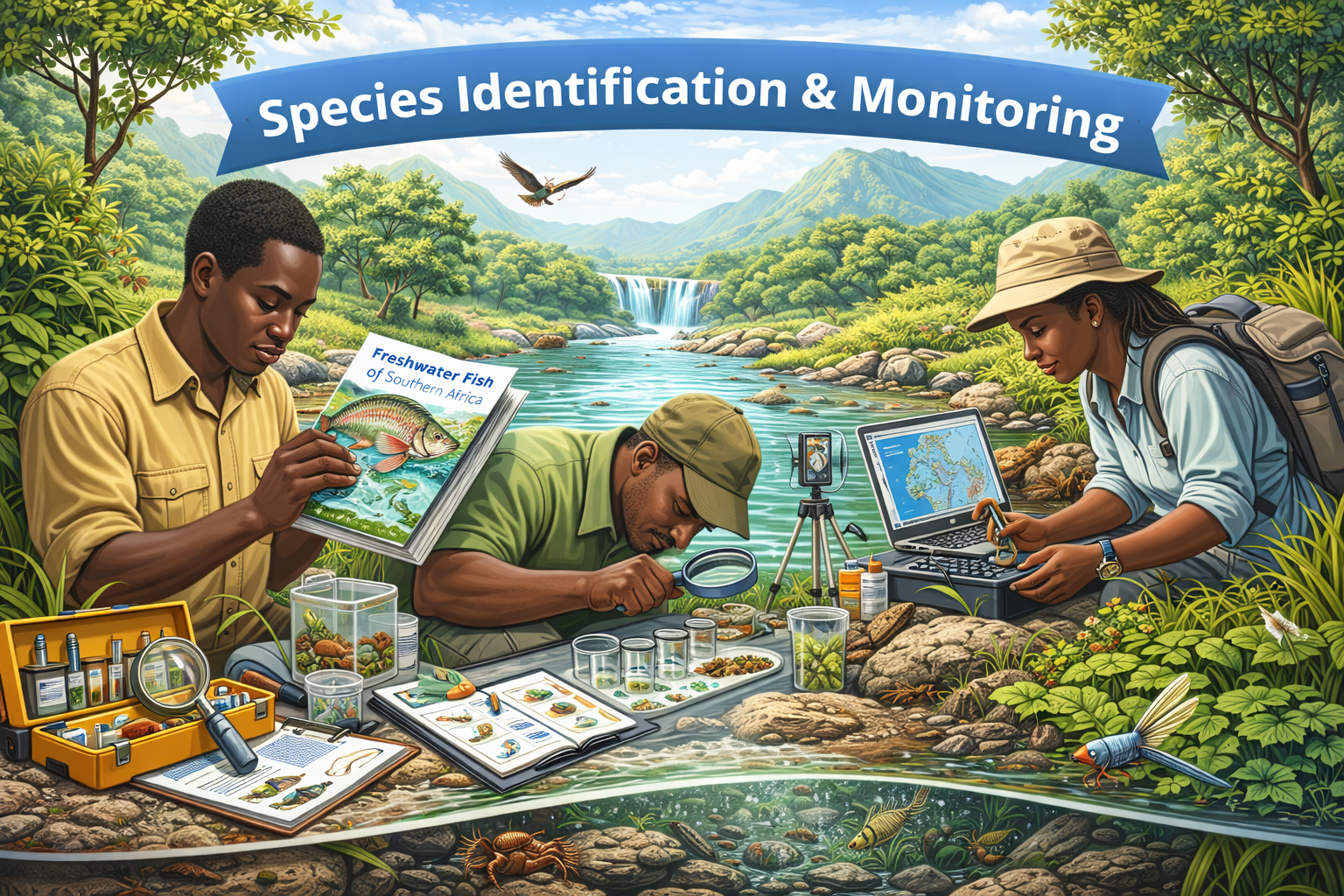
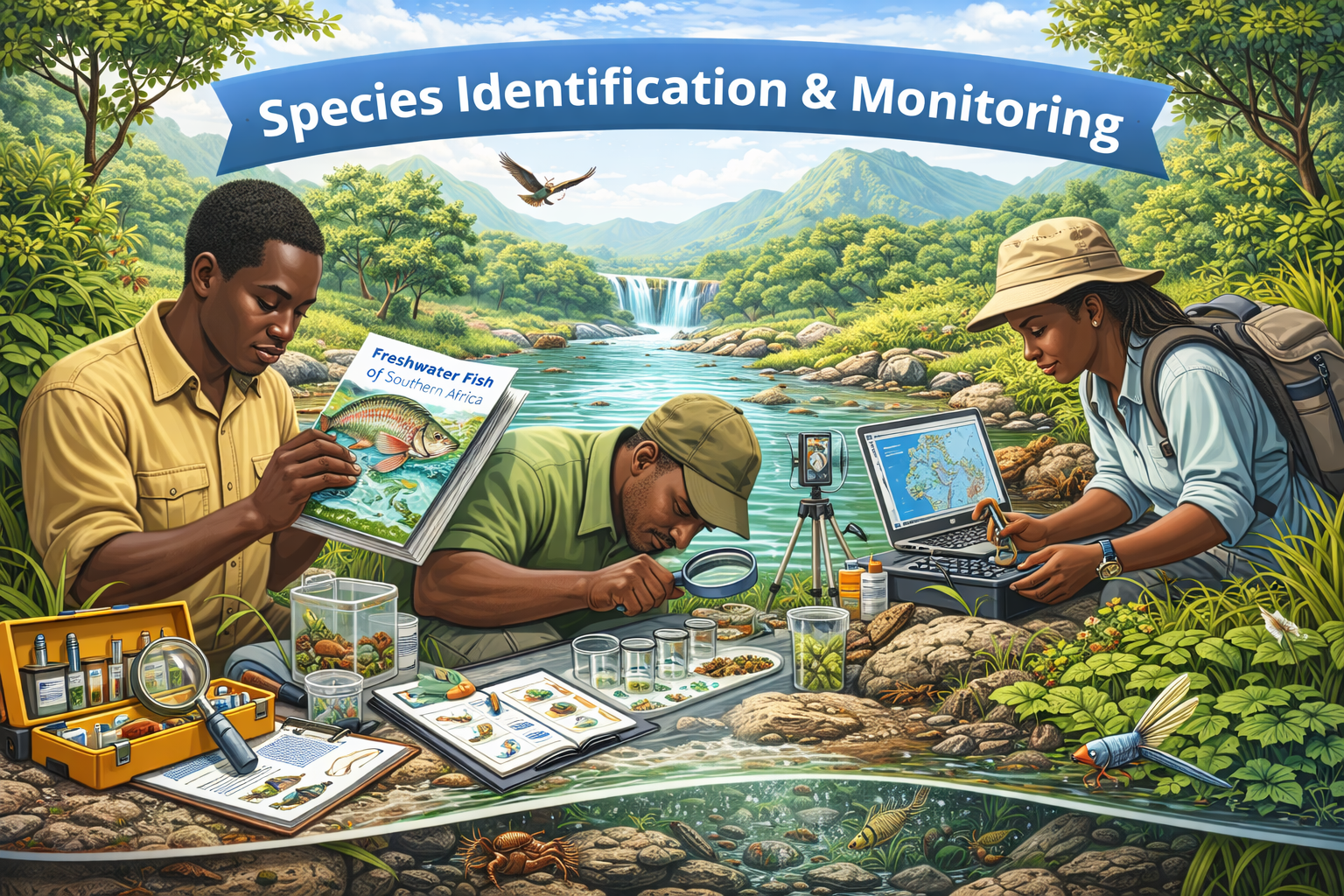
Species Identification & Monitoring
Overview
Develop practical skills in identifying key freshwater taxa found in Southern African river systems. This course focuses on fish, macroinvertebrates, and aquatic plants commonly used as biological indicators of ecosystem health, with an emphasis on species recorded in the transboundary Inkomati Basin. You’ll learn how to use identification resources confidently, document findings correctly, and apply biodiversity evidence to long-term monitoring and ecological interpretation.
What you will learn
- Fish identification – using taxonomic keys and guides for the Inkomati system
- Macroinvertebrates (SASS5) – identification to family level using SASS5 protocols
- Indicator species – recognising key taxa and understanding environmental tolerances
- Documentation – photographic records and voucher specimen preparation
- Monitoring design – building long-term monitoring programmes and repeatable workflows
- Interpretation – reading biodiversity trends and assessing ecological status
Course details
- Duration: 10–12 hours
- Prerequisites: Biodiversity Data Collection Methods
- Language: English (Portuguese translation available)
- Teacher: Hugo Retief
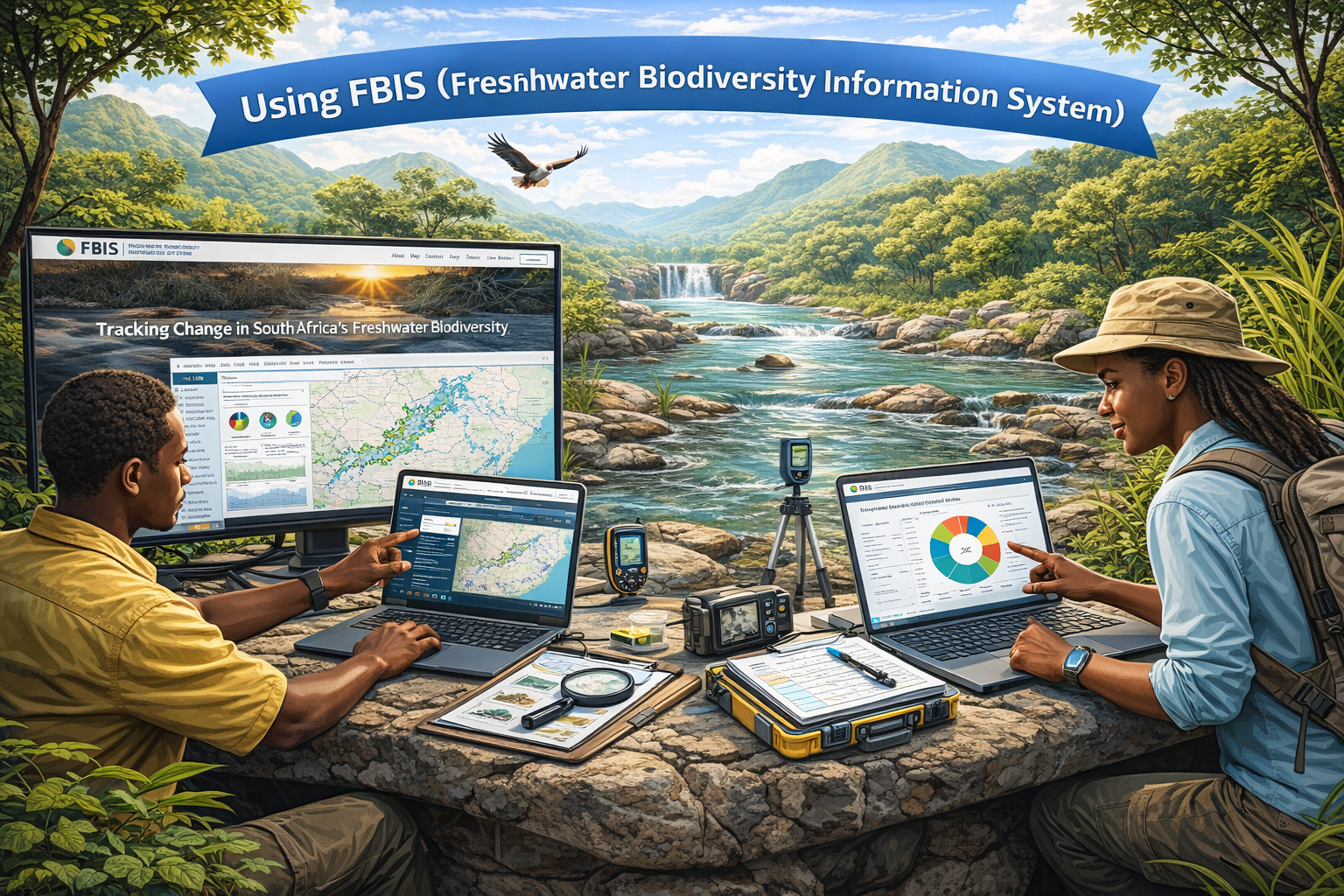
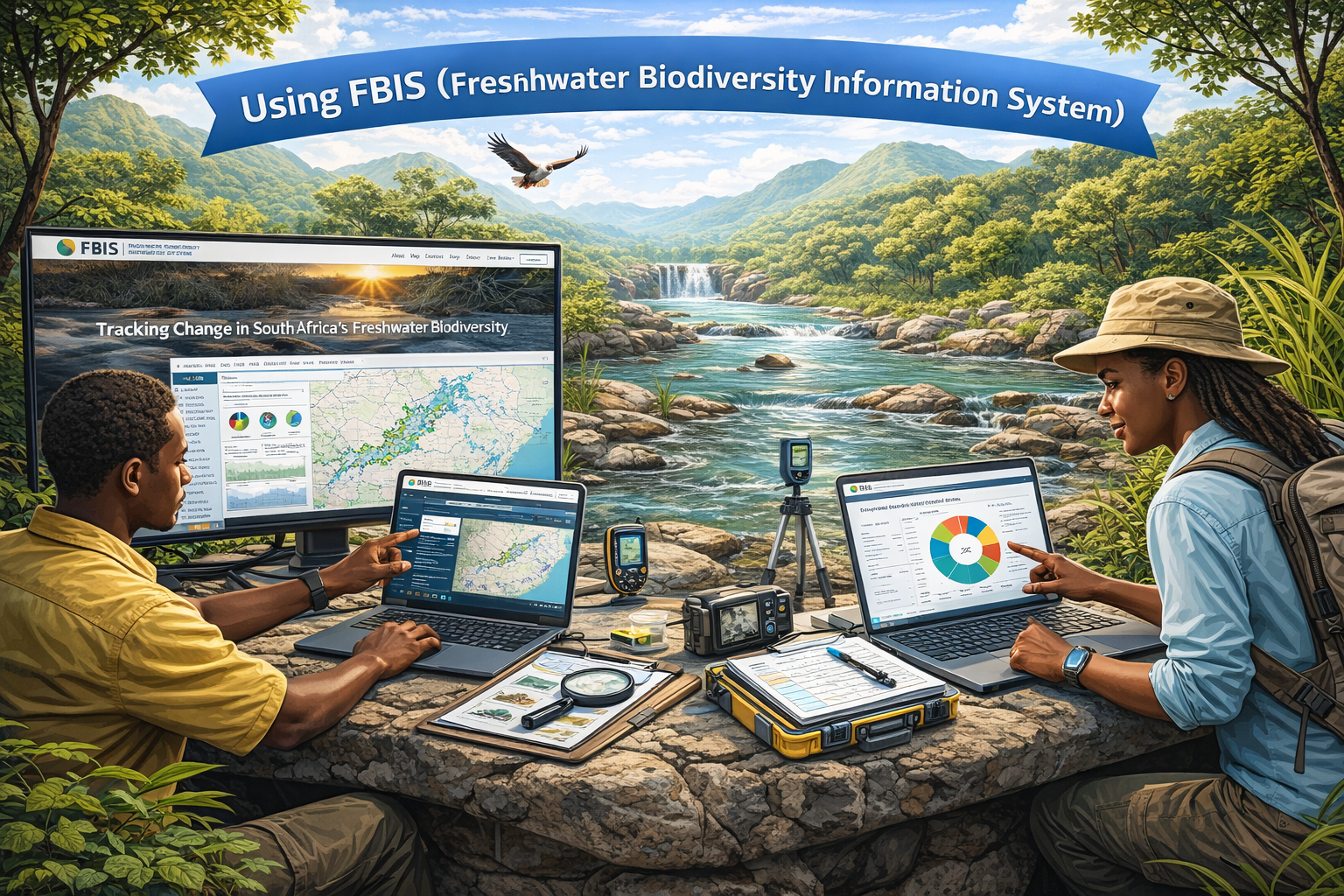
Using FBIS (Freshwater Biodiversity Information System)
Overview
Master the Freshwater Biodiversity Information System (FBIS), the open-access platform for freshwater biodiversity data in Southern Africa. This hands-on course guides users through data discovery, contribution, and analysis using FBIS tools developed by the Freshwater Research Centre. You’ll learn how to find and interpret records, contribute new datasets responsibly, and use FBIS outputs in GIS and statistical workflows.
What you will learn
- Interface & map viewer – navigating the FBIS web platform and spatial tools
- Data discovery – searching and downloading biodiversity occurrence records
- Quality assurance – understanding validation processes and quality flags
- Contributing records – data formatting, upload procedures, and submission checks
- Reporting – generating species lists and occurrence summaries for sites or regions
- Integration – using FBIS data in GIS and statistical software
- Licensing & citation – Creative Commons requirements and best-practice attribution
- GBIF integration – linking FBIS data with the Global Biodiversity Information Facility
Course details
- Duration: 6–8 hours
- Prerequisites: Basic computer literacy
- Language: English (Portuguese translation available)
- Access: https://freshwaterbiodiversity.org
- Teacher: Hugo Retief