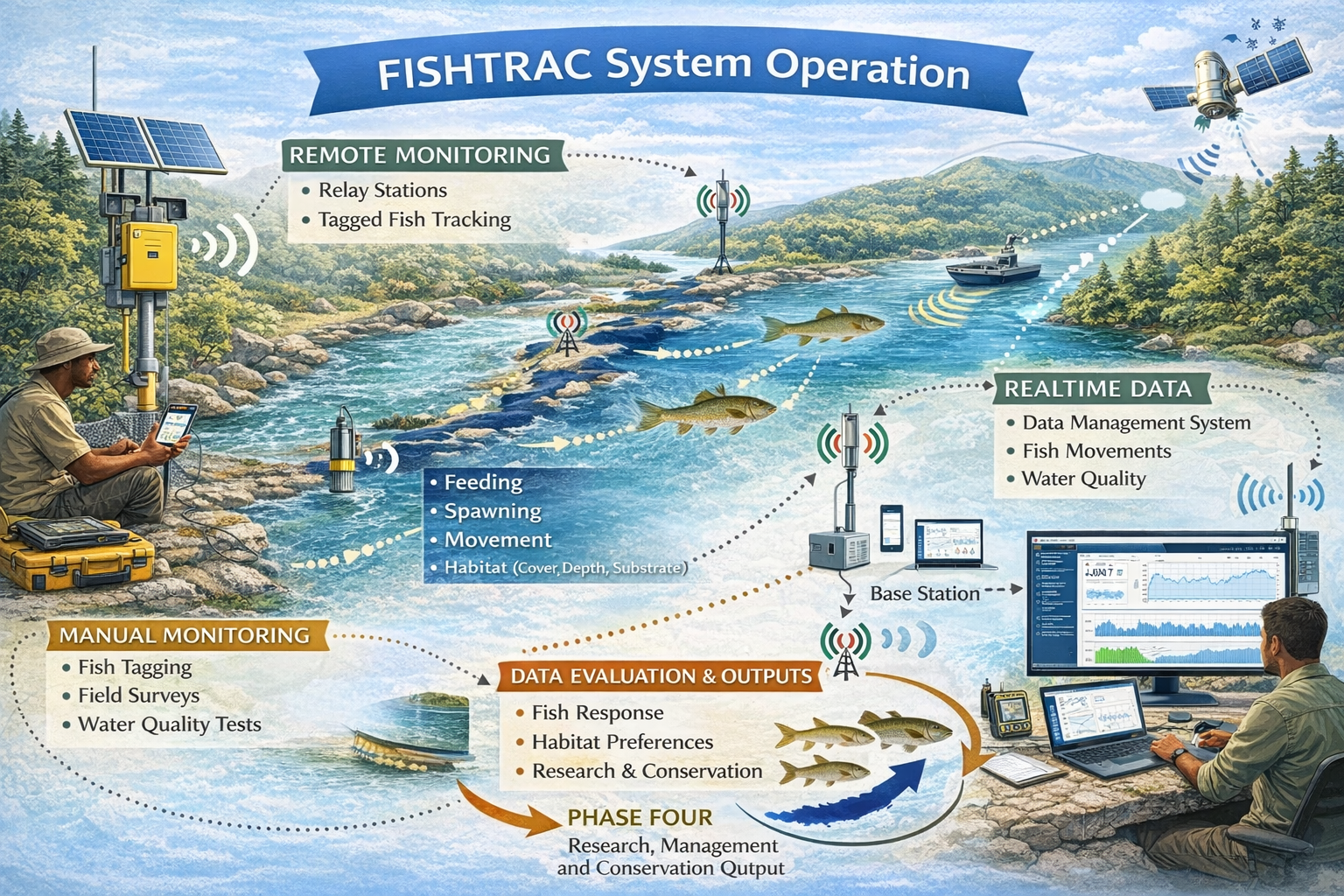
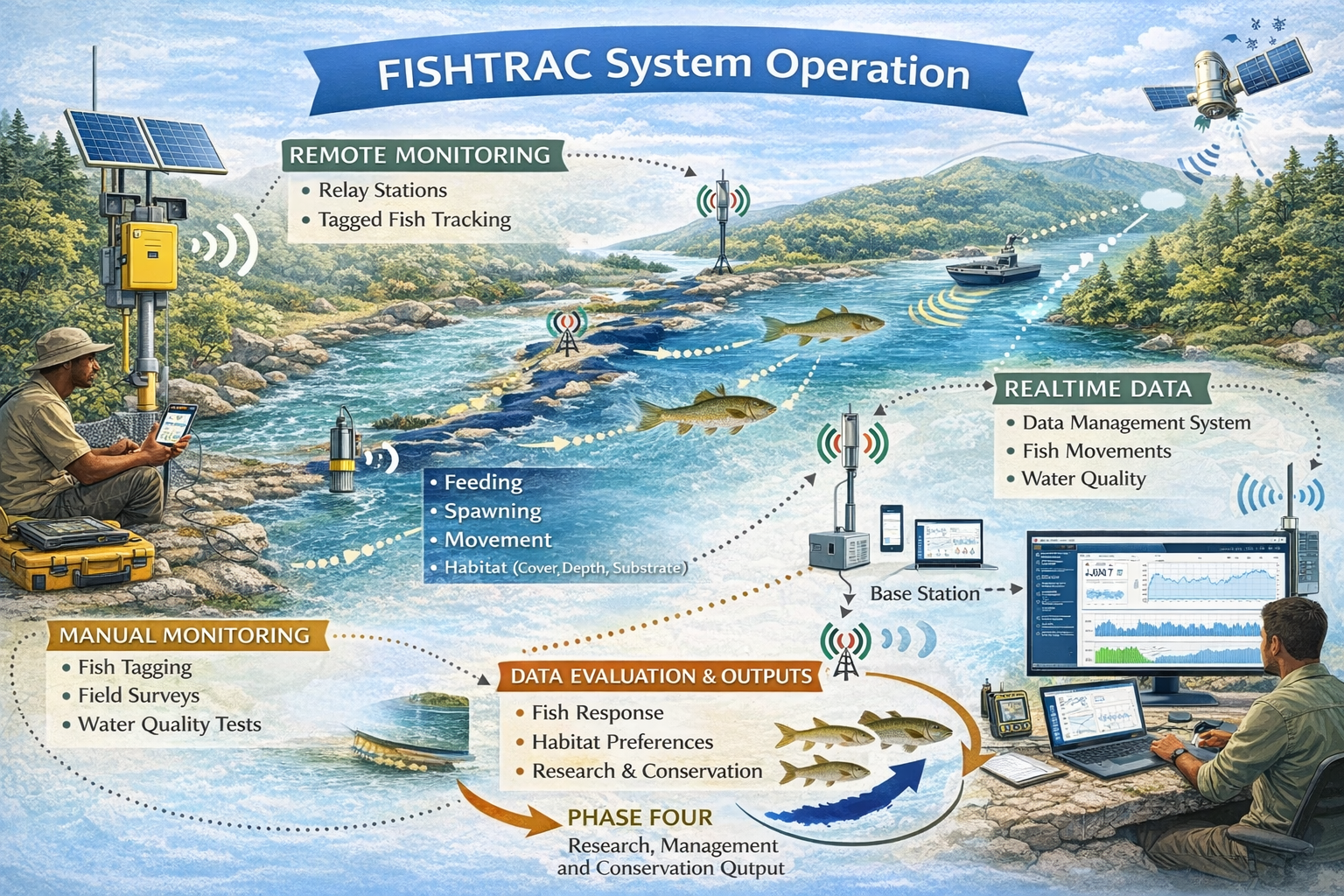
FISHTRAC System Operation
Overview
Gain hands-on expertise in operating the FISHTRAC system, a wireless telemetry network for real-time tracking of fish movement and behaviour. Developed by Rivers of Life Aquatic Health Services and Wireless Wildlife, FISHTRAC enables continuous monitoring of aquatic species as bio-indicators of ecosystem health. This course covers the end-to-end workflow—from tagging and network deployment through to data transmission and interpretation—so you can operate the system safely, reliably, and consistently across sites.
What you will learn
- System architecture – tags, base stations, relay stations, and data management
- Tag types & sensors – motion, temperature, pressure, and environmental sensing options
- Fish handling & tagging – capture, anaesthesia, and surgical tag implantation procedures
- Network deployment – base-station placement, setup, and configuration
- Data flow – retrieval and transmission to the Data Management System (DMS)
- Behaviour interpretation – activity, depth preferences, and movement patterns
- Operations – maintenance, troubleshooting, and battery management
- Ethics – ethical considerations and animal welfare in fish tagging research
Course details
- Duration: 10–12 hours (includes practical field component)
- Prerequisites: Species Identification & Monitoring (recommended)
- Language: English (Portuguese translation available)
- Professor: Hugo Retief
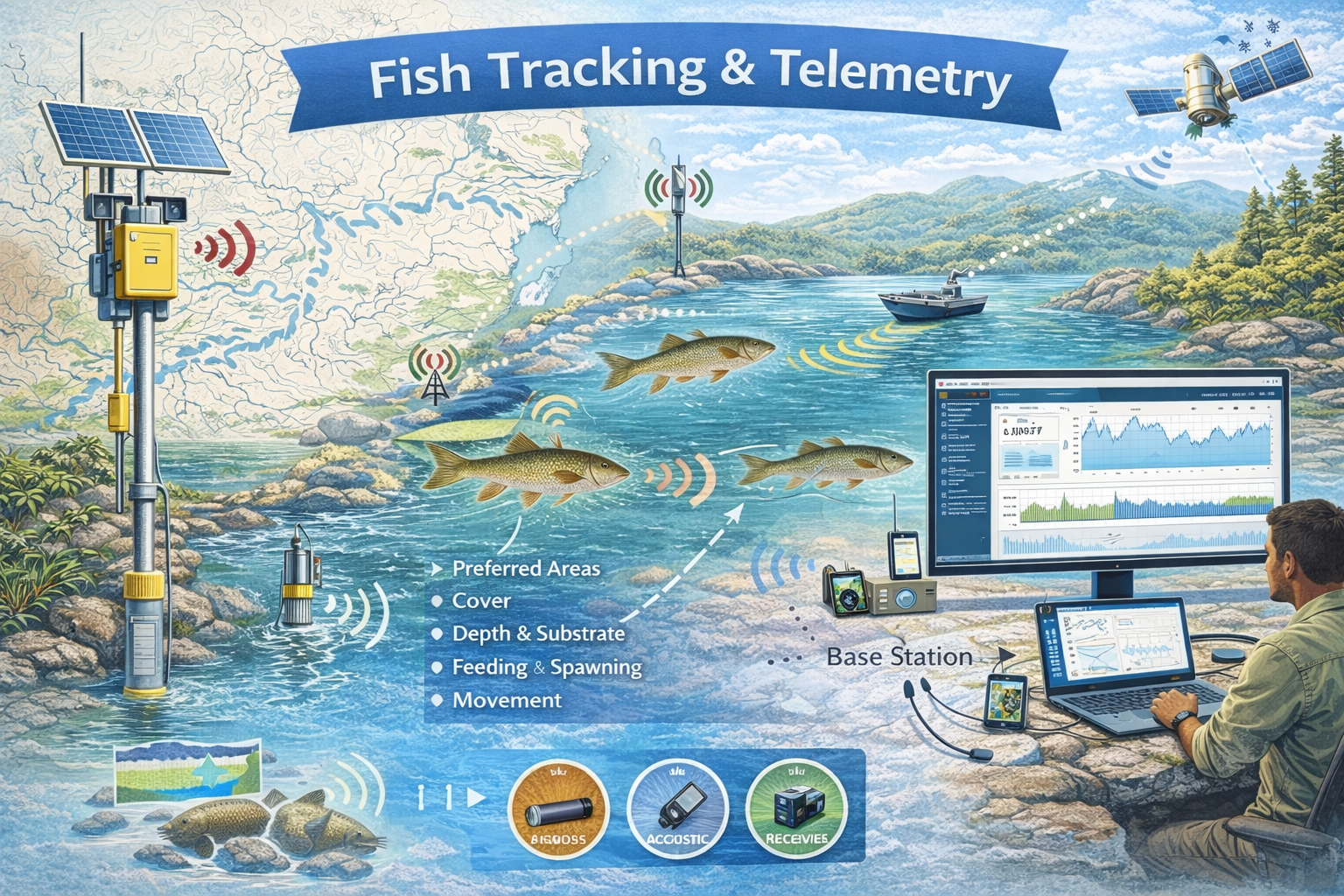
Fish Tracking & Telemetry
Overview
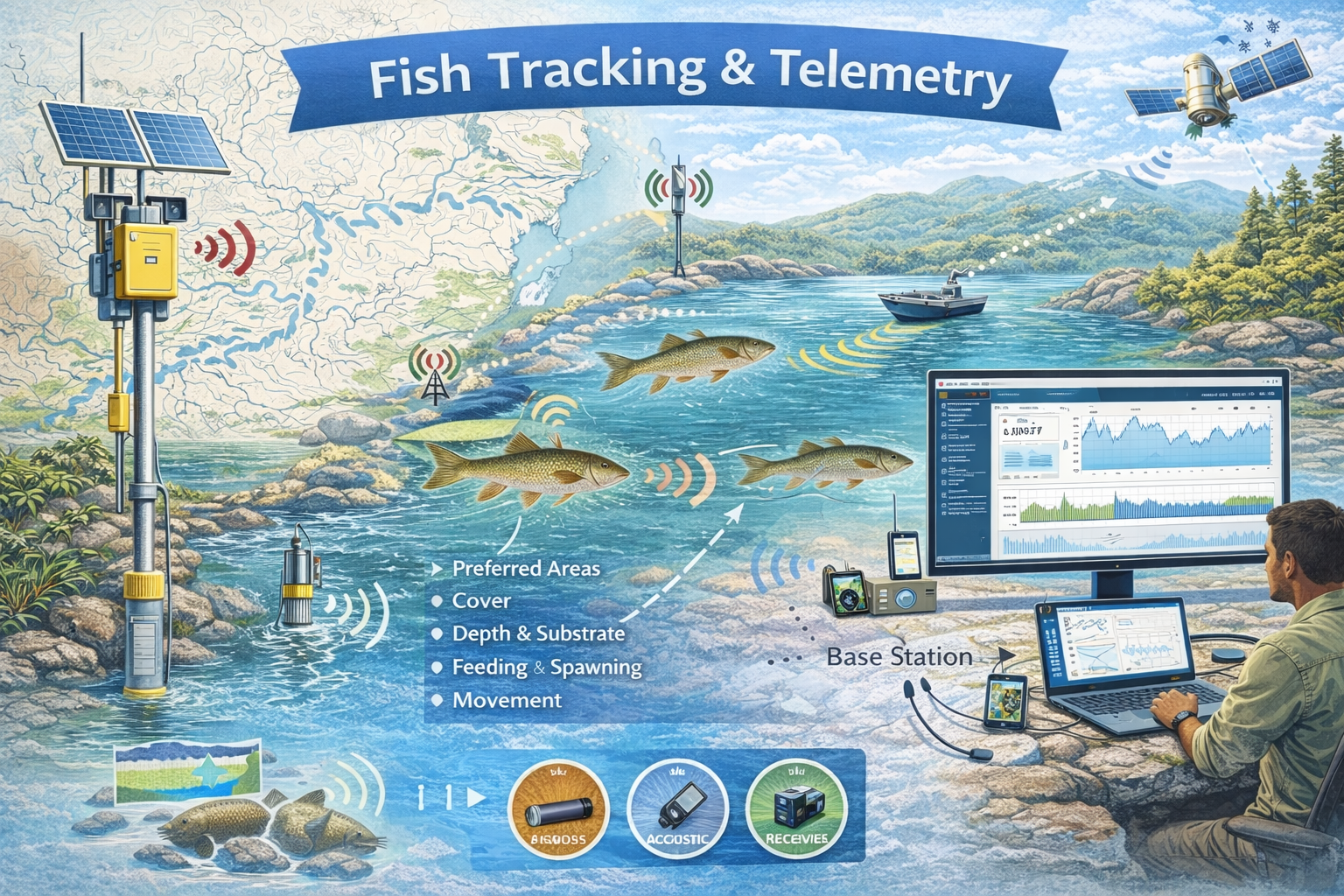
Explore the science and application of fish telemetry for ecological research and conservation. This course covers study design, data analysis, and interpretation of fish movement patterns in relation to environmental variables, with case studies from the Inkomati Basin’s Crocodile and Sabie Rivers. You’ll learn how telemetry evidence can be translated into management-relevant insights, including early warning signals of ecological stress.
What you will learn
- Biotelemetry technologies – radio, acoustic, and PIT tag principles and use cases
- Study design – framing questions, selecting species, determining sample sizes and duration
- Movement ecology – home range, migration, and habitat use interpretation
- Analytics & machine learning – EWMA-style anomaly detection concepts and applications
- Ecohydrological links – relating behaviour to flow regime, water quality, and habitat variables
- Real-time alerts – designing alerts to detect potential stress responses
- Communication – reporting findings clearly to managers and stakeholders
- Case studies – field examples from the Crocodile and Sabie Rivers in the Inkomati Basin
Course details
- Duration: 8–10 hours
- Prerequisites: FISHTRAC System Operation
- Language: English (Portuguese translation available)
- Professor: Hugo Retief
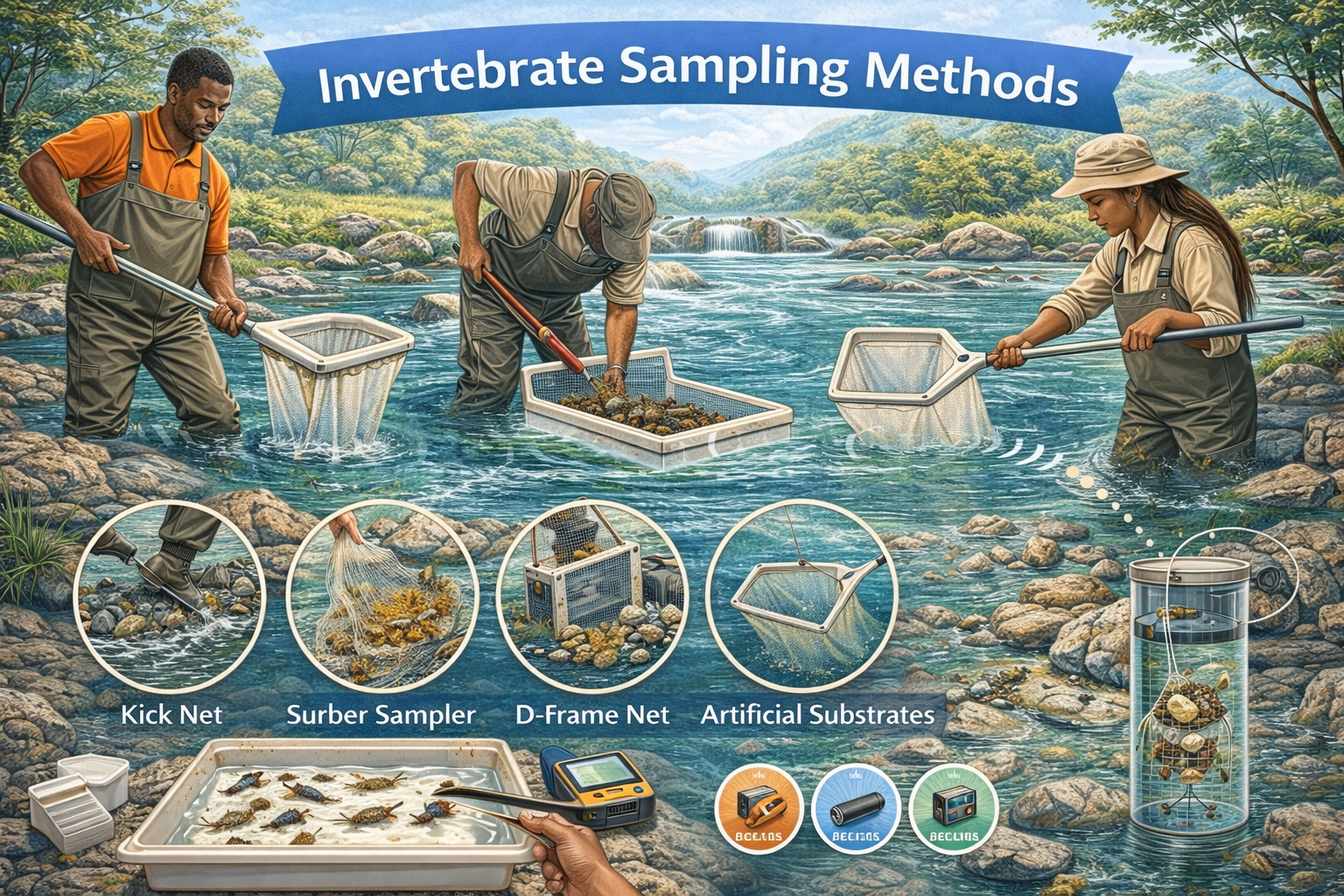
Invertebrate Sampling Methods
Overview
Master the South African Scoring System version 5 (SASS5) and related protocols for sampling and assessing freshwater macroinvertebrates. Invertebrates are powerful indicators of water quality and ecosystem health, and this course builds the practical skills needed to run consistent biomonitoring programmes—from field preparation and sampling through to scoring, interpretation, and integration with regional data platforms.
What you will learn
- SASS5 protocol – biotope sampling, kick-sampling, and stone turning methods
- Field readiness – equipment requirements and site preparation
- On-site identification – identifying taxa to family level using SASS5 scoring sheets
- Scoring – calculating SASS scores and Average Score Per Taxon (ASPT)
- Interpretation – ecological categories, reference conditions, and what scores mean
- Quality assurance – inter-operator consistency and common sources of error
- Integration – linking SASS outputs with FBIS and INWARDS workflows
- Alternative protocols – MIRAI and miniSASS as complementary methods alongside SASS5
Course details
- Duration: 8–10 hours (includes practical field component)
- Prerequisites: Introduction to Freshwater Ecosystems
- Language: English (Portuguese translation available)
- Professor: Hugo Retief
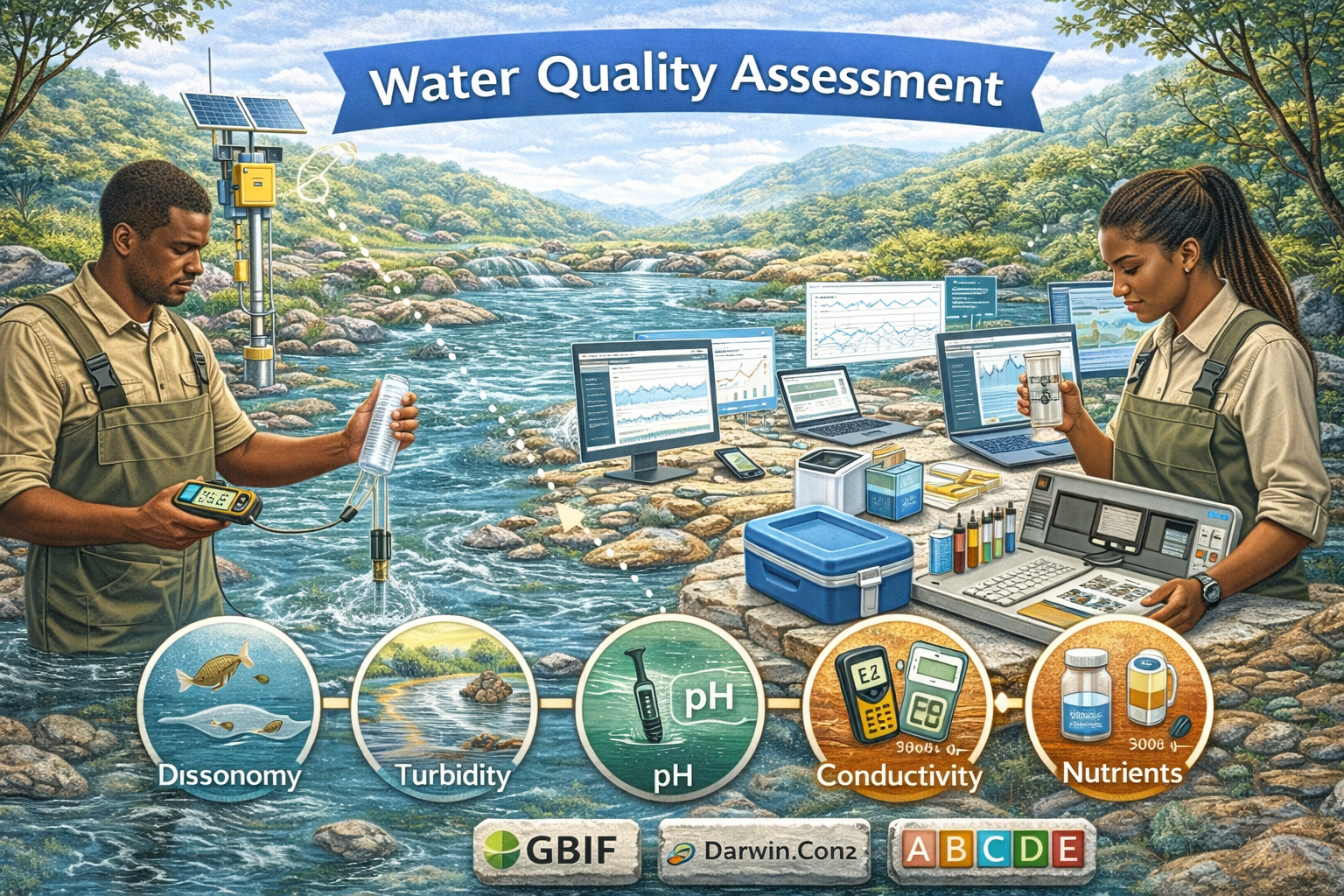
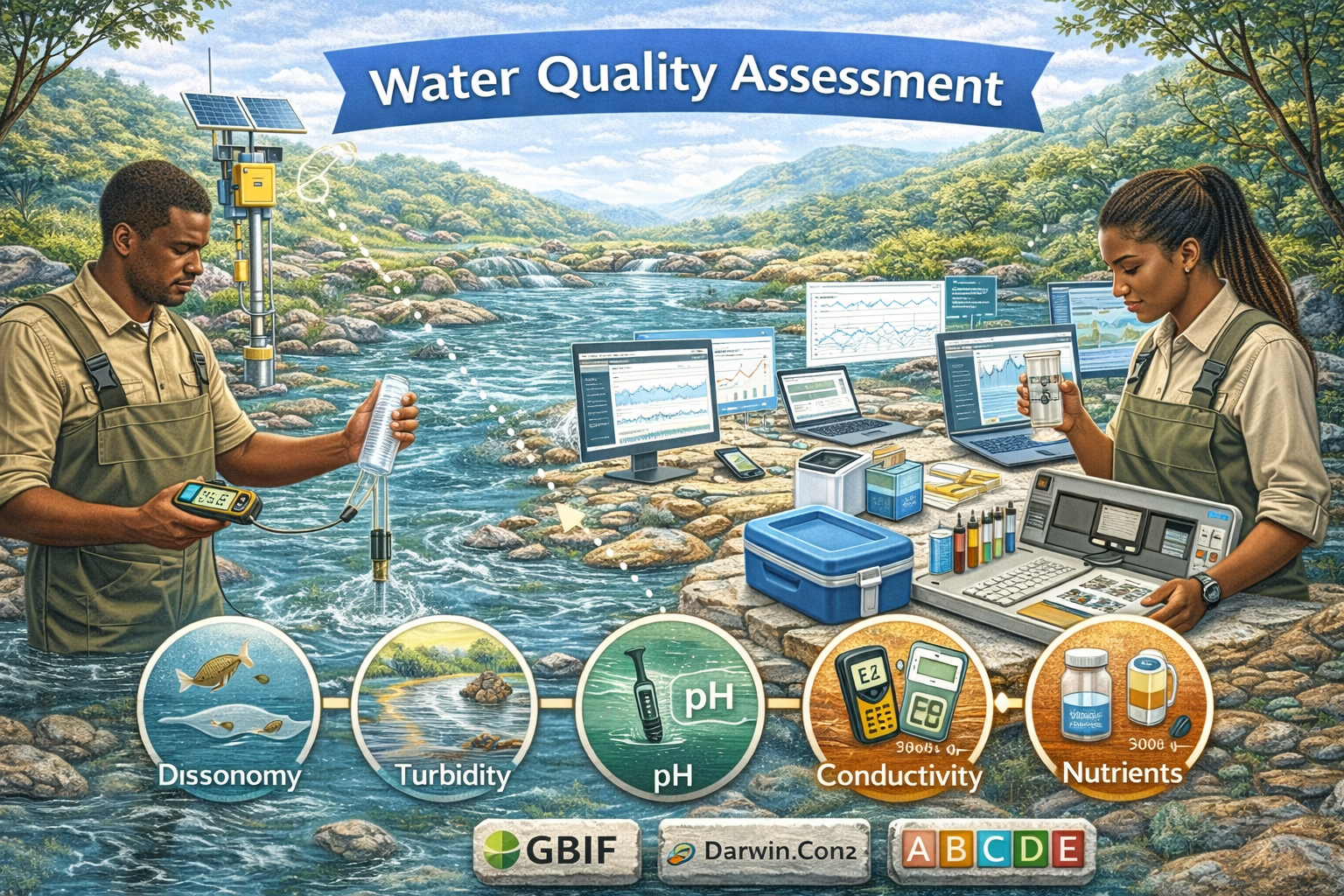
Water Quality Assessment
Overview
Learn to measure, interpret, and report water quality parameters that are critical for aquatic ecosystem health. This course covers field measurement techniques, laboratory analysis, and practical workflows for using water quality data within INWARDS for compliance monitoring and ecological assessment. You’ll build confidence in sampling and QA, understand how to interpret results against guidelines, and learn how to communicate trends and risks clearly.
What you will learn
- Core parameters – temperature, pH, dissolved oxygen, conductivity, and turbidity
- Nutrients – nitrogen and phosphorus species and what they indicate
- Toxicants & emerging contaminants – metals, pesticides, and pharmaceuticals
- Field instruments – calibration, measurement protocols, maintenance, and common errors
- Laboratory sampling – bottles, preservation, and chain-of-custody procedures
- Standards & guidelines – South African, Mozambican, and international reference frameworks
- INWARDS application – using the Water Quality dashboard for trend analysis and compliance
- Ecological assessment – interpreting water quality results for ecosystem health evaluation
Course details
- Duration: 8–10 hours
- Prerequisites: Introduction to Freshwater Ecosystems
- Language: English (Portuguese translation available)
- Professor: Hugo Retief